Tropical Innovation Reshapes Mixed Fruit Juice Market in Oceania
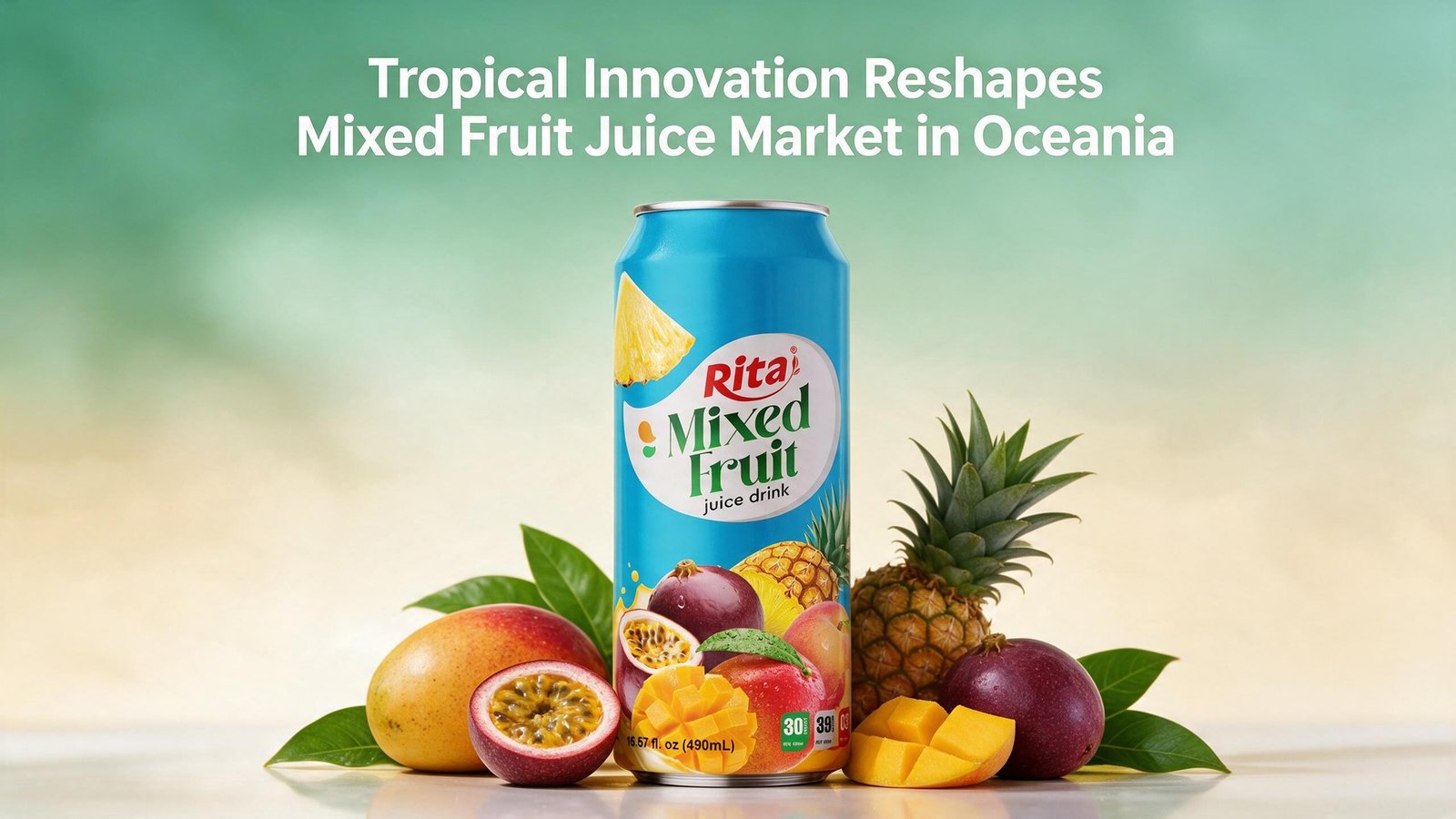
The mixed fruit juice category across Oceania is entering a period of quiet reinvention. As consumers in Australia, New Zealand, Fiji and Papua New Guinea weigh sugar content, ingredient transparency and packaging convenience, manufacturers are responding with reformulated blends and smarter formats. Among the products drawing trade attention is the Real Best Fruit To Mixed Fruit Juice Drink 490ml Cans, a tropical blend from Vietnamese exporter RITA that pairs a three-fruit recipe with a lightweight aluminum can.
Key Takeaways
- Consumers across Oceania are showing stronger interest in tropical mixed fruit juice blends with transparent ingredient lists.
- The 490ml aluminum can format aligns with on-the-go retail and food-service occasions in Australia, New Zealand, Fiji and Papua New Guinea.
- RITA Food and Drink Co., Ltd operates 50+ automated production lines and exports to more than 200 countries and territories.
- Product certifications including BRC, FSSC 22000, Halal and Kosher support entry into diverse Oceania retail channels.
- Innovation in fruit sourcing and blending remains a key differentiator in a crowded juice aisle.
Mixed Fruit Juice Demand Shifts Toward Tropical Blends
Category growth in Oceania is being shaped less by novelty flavors and more by familiar tropical profiles delivered with cleaner labels. Mango, passion fruit and pineapple remain among the most recognized fruit notes in the region, and blends built around them travel well across retail and food-service channels.
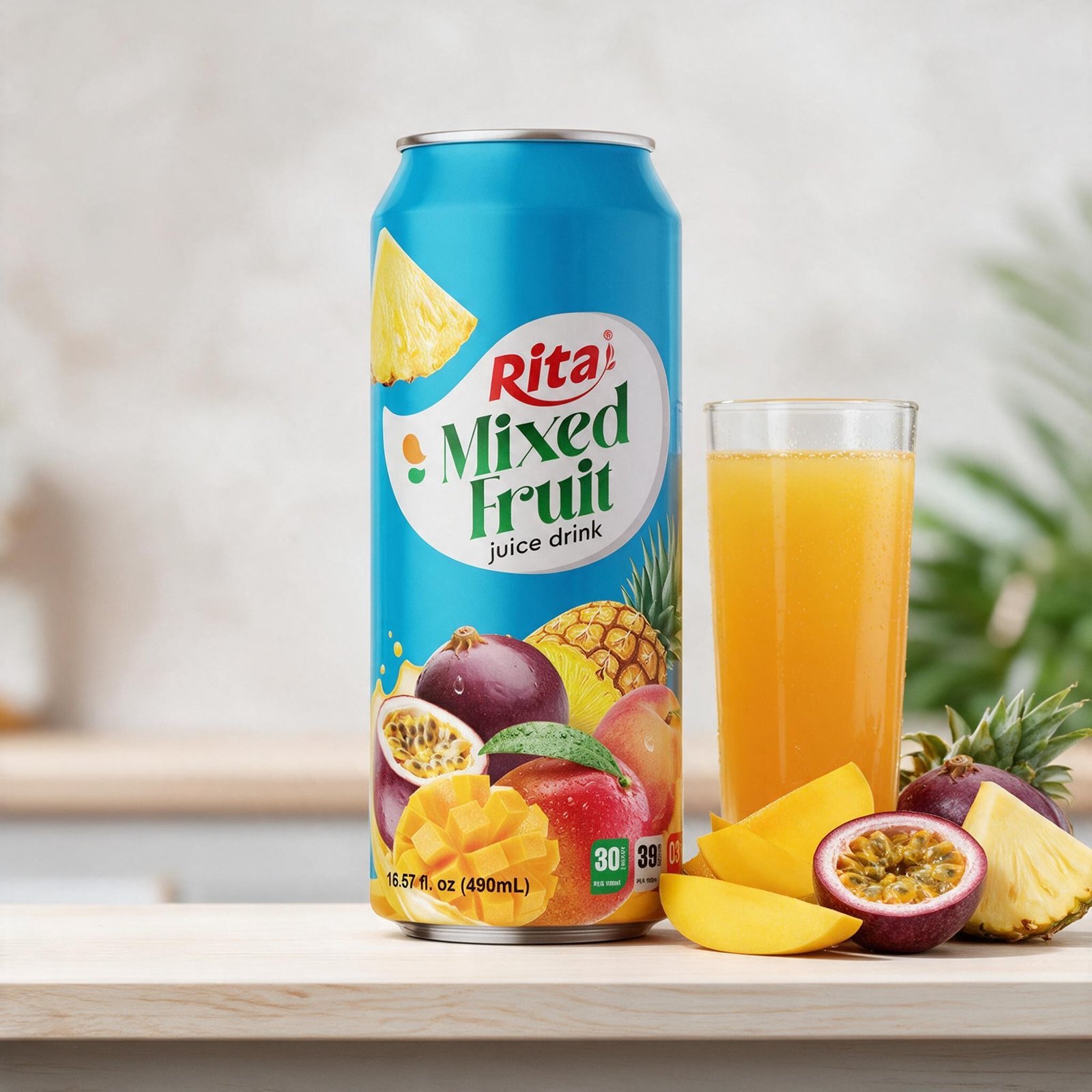
What is changing is the framing. Retail buyers are looking for drinks that sit comfortably alongside sparkling waters and low-sugar options, rather than competing purely on sweetness. That shift has pushed manufacturers toward recipes that foreground fruit content and simplify ingredient decks. The Real Best Fruit To Mixed Fruit Juice Drink 490ml Cans positions itself squarely in this lane, presenting a mango, passion fruit and pineapple blend with no added sugar in a single-serve format.
Why the 490ml can format matters
Format decisions carry commercial weight in Oceania's convenience-led retail environment. A 490ml aluminum can sits between a standard 330ml soft drink and a larger sharing bottle, giving consumers a substantial single-serve option that still fits standard fridge shelves and vending machines. Aluminum's recyclability profile also supports the sustainability narratives that major Australian and New Zealand supermarket chains continue to prioritise in supplier discussions.
For importers and distributors, the can format simplifies logistics. Pallet configurations are predictable, breakage risk is minimal compared with glass, and shelf-life handling is well understood across the region's warm supply chains, particularly in Fiji and Papua New Guinea.
Inside the RITA Tropical Mixed Fruit Juice Recipe
The product's formulation is deliberately narrow: mango juice, passion fruit juice and pineapple juice, drawn from non-GMO fruit sources. That three-fruit structure gives the drink a recognizable tropical profile without the flavor complexity that can blur a blend's identity on shelf.
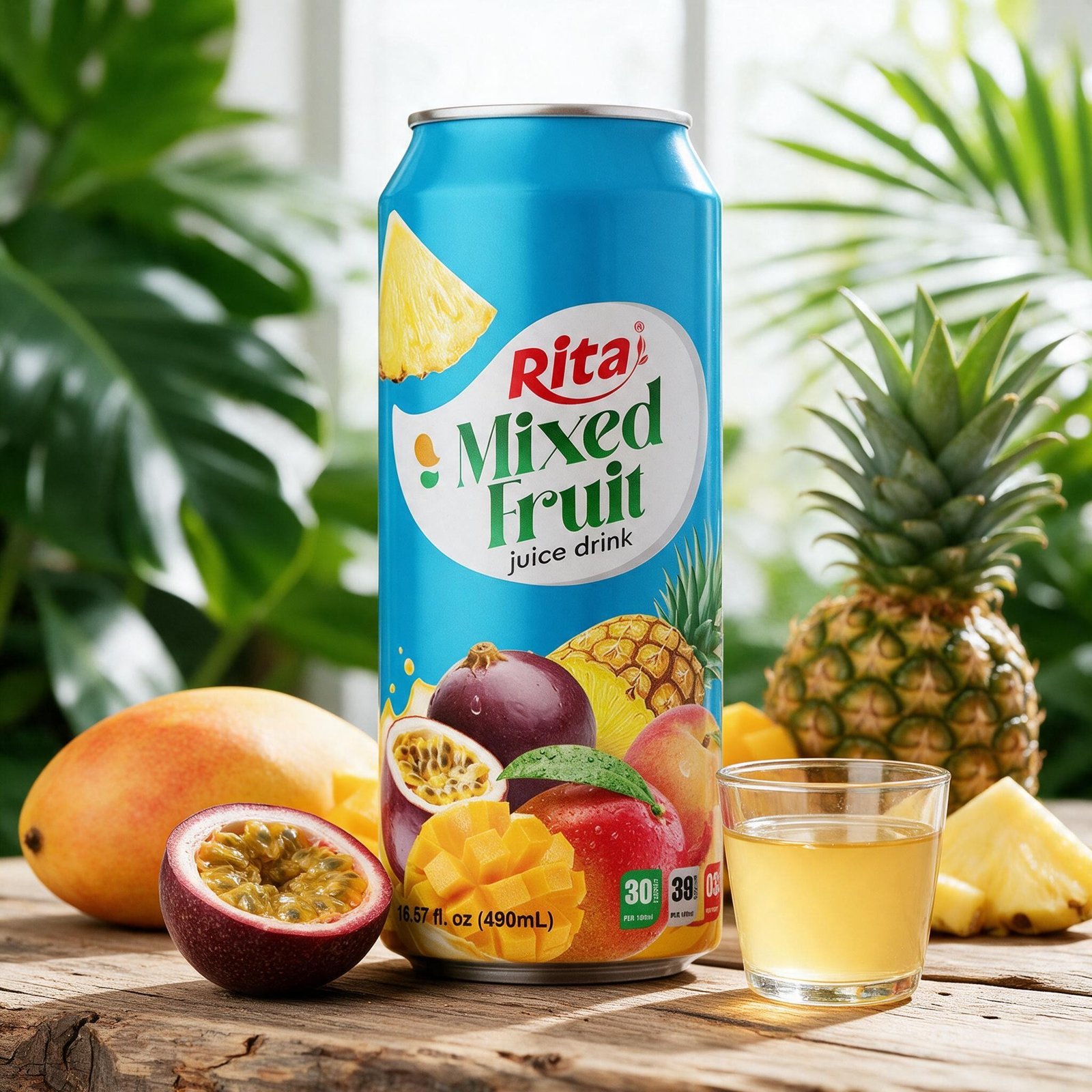
Sensory positioning matters in a category where shoppers often decide in seconds. Mango supplies body and a rounded sweetness, passion fruit contributes aromatic sharpness, and pineapple adds brightness. Together they create a profile that reads as "tropical" across markets with very different beverage traditions, from metropolitan Australian supermarkets to island retail in Fiji.
No added sugar as a market signal
The absence of added sugar is a formulation choice with commercial implications. It aligns the product with regulatory and retailer pressures across Oceania, where sugar-reduction commitments have accelerated in recent years. For buyers screening new SKUs, a no-added-sugar claim simplifies the evaluation process and reduces friction at listing stage.
It also broadens the occasions in which the drink can be merchandised. Positioned alongside chilled juices rather than carbonated soft drinks, a tropical blend without added sugar can sit in breakfast, lunch and snack dayparts without requiring a separate shelf narrative.
From Orchard to Can, Sourcing the Tropical Fruit Base
Flavor consistency in a blended juice starts in the field. The three fruits at the center of this recipe each have distinct growing regions, harvest windows and quality parameters that manufacturers must manage to keep a can-to-can profile stable across production runs.
Mango sourcing for RITA's juice program traces back to the company's mango farm network in Vietnam, where harvest timing and fruit maturity directly influence the sweetness and color carried into the final blend. Consistent raw material quality at this stage reduces the need for downstream adjustment and supports a more uniform tasting product across export shipments.
Passion fruit presents a different challenge. The fruit's aromatic intensity varies significantly with ripeness, so selection criteria focus on fruit that delivers the characteristic tartness consumers expect from the variety. RITA's passion fruit gardens in Vietnam's Central Highlands supply the aromatic component of the blend, with growing conditions in the highlands contributing to the fruit's concentrated flavor profile.
Pineapple rounds out the recipe with acidity and brightness. The fruit's sugar-to-acid balance shifts with variety and maturity, making procurement specifications particularly important for a blend that carries no added sugar to offset variation. RITA's pineapple farm operations feed raw material into the juice program, supporting the consistency that export customers require across repeat orders.
For buyers, the visibility of sourcing across all three fruits is a meaningful quality signal. It suggests a manufacturer managing its supply base rather than relying solely on spot-market fruit purchases, which can introduce batch variation.
Video: A look inside RITA's pineapple sourcing operations — https://www.youtube.com/watch?v=E0Xek8Q6Lzo
Certification Stack Opens Oceania Retail Doors
Regulatory and retailer requirements across Oceania vary meaningfully between markets, and a single certification rarely clears every channel. Australia and New Zealand operate mature food-safety regimes with stringent importer expectations, while Fiji and Papua New Guinea combine local standards with reliance on imported packaged goods that must meet recognized international benchmarks.
RITA's certification portfolio is built for exactly this kind of multi-market entry. The company holds BRC and FSSC 22000 certifications alongside ISO, GMP and HACCP systems, covering the food-safety management frameworks most frequently requested by large Oceania grocery chains and food-service distributors. Halal certifications from Jakim and HCA-GCC, plus Kosher certification, extend the product's addressable channels into specialty and ethnic retail segments that are expanding in Australian and New Zealand cities.
| Certification | Primary Relevance in Oceania |
|---|---|
| BRC | UK-origin standard widely referenced by AU/NZ retail buyers |
| FSSC 22000 | Global food-safety scheme accepted by major grocery chains |
| Halal (Jakim, HCA-GCC) | Supports specialty and export channel access |
| Kosher | Expands specialty retail eligibility |
| ISO, GMP, HACCP | Baseline requirements for importer due diligence |
| SMETA | Ethical audit framework increasingly requested by retailers |
Certification list per manufacturer disclosures.
RITA's OEM and Export Engine Behind the Can
Behind the product sits a manufacturer with scale that few regional competitors can match. RITA Food and Drink Co., Ltd was established in 2004 and now operates more than 50 automated production lines, exporting over 1,200 containers per month to buyers in more than 200 countries and territories. That infrastructure underpins the company's OEM service offering, which allows private-label and co-branded programs to run alongside house brands like the one carried on juice9.com.
For Oceania importers, this scale translates into practical advantages. Order consolidation is easier when a supplier already ships high volumes through established freight lanes. Lead times are more predictable when production capacity is automated rather than batch-dependent. And the breadth of packaging capability — aluminum cans, glass bottles, PET and PP — means a distributor can standardize on one supplier across multiple SKUs rather than fragmenting across several.
The company's R&D capacity also matters in a category where retailers periodically ask for reformulations. Whether a buyer needs a recipe adjustment for a private-label program or a pack-size variant for a new channel, an in-house development function shortens the iteration cycle considerably.
Buyers exploring the broader range can review the full fruit drink catalog on juice9.com, where the mixed fruit can sits alongside other tropical and single-fruit options. The manufacturer's fruit juice lineup provides additional context on the breadth of formats and recipes available for export programs.
Where the Product Fits Across Oceania Channels
Channel fit varies across the region, and the 490ml tropical can has credible placement in several. In Australia and New Zealand, convenience retail and chilled juice cabinets are the most natural homes, with the no-added-sugar positioning supporting listing in chains that have committed to sugar reduction targets. Travel retail and airline catering represent a secondary opportunity, where a single-serve tropical drink with a recognizable flavor profile performs reliably.
In Fiji and Papua New Guinea, imported packaged beverages occupy a larger share of shelf space, and a well-certified tropical juice can compete directly with regional brands on both quality signals and price positioning. The aluminum can's durability in warmer supply chains is a practical advantage in these markets.
Food-service and hospitality is a further avenue. Hotels, resorts and quick-service operators across the Pacific frequently source single-serve beverages that require minimal handling, and a sealed can format with a stable tropical profile fits that requirement without demanding specialized storage.
Competitive Context in the Wider Beverage Trade
The mixed fruit juice segment does not exist in isolation. Broader beverage trade flows continue to shift: Heineken's acquisition of Brazilian beer and yerba-mate producer Better Drinks underscores how multinational players are diversifying beyond their core categories, while Zevia's raised forecast after a strong third quarter signals continued investor appetite for beverages positioned around simplified ingredient stories. Meanwhile, governance and ownership questions at players like Castel and Coca-Cola HBC remind the market that supply relationships can shift quickly at the top of the industry.
For mid-market importers in Oceania, these macro moves reinforce a familiar lesson: diversifying the supplier base and securing products with strong certification profiles reduces exposure to disruption among the largest global brands. A manufacturer exporting to 200+ countries with a full certification stack offers exactly that kind of hedge.
Frequently Asked Questions
What fruits are in the Real Best Fruit To Mixed Fruit Juice Drink 490ml Cans?
The drink is a blend of mango juice, passion fruit juice and pineapple juice, all sourced from non-GMO fruit. The recipe contains no added sugar, and the product is packaged in a 490ml aluminum can.
Who manufactures the RITA Tropical Mixed Fruit Juice?
The product is made by RITA Food and Drink Co., Ltd, a Vietnamese beverage manufacturer established in 2004. The company operates more than 50 automated production lines and exports to over 200 countries and territories, including markets across Oceania.
Which certifications does the manufacturer hold?
RITA holds BRC, FSSC 22000, Halal Jakim, Halal HCA-GCC, Kosher, ISO, GMP, HACCP and SMETA certifications. This portfolio supports listing across mainstream retail, specialty and food-service channels in Australia, New Zealand, Fiji and Papua New Guinea.
Is the 490ml aluminum can format suitable for Oceania retail?
Yes. The 490ml size fits standard retail shelving and vending configurations, while aluminum offers durability across warm supply chains and aligns with recyclability expectations held by major grocery chains in the region.
Does RITA offer OEM or private-label programs for this juice?
RITA provides both OEM and ODM services, allowing buyers to develop private-label or co-branded tropical juice programs alongside existing house brands. More details are available through the manufacturer's OEM service page.