Vietnamese Chia Seed Drink Gains Ground Across Oceania
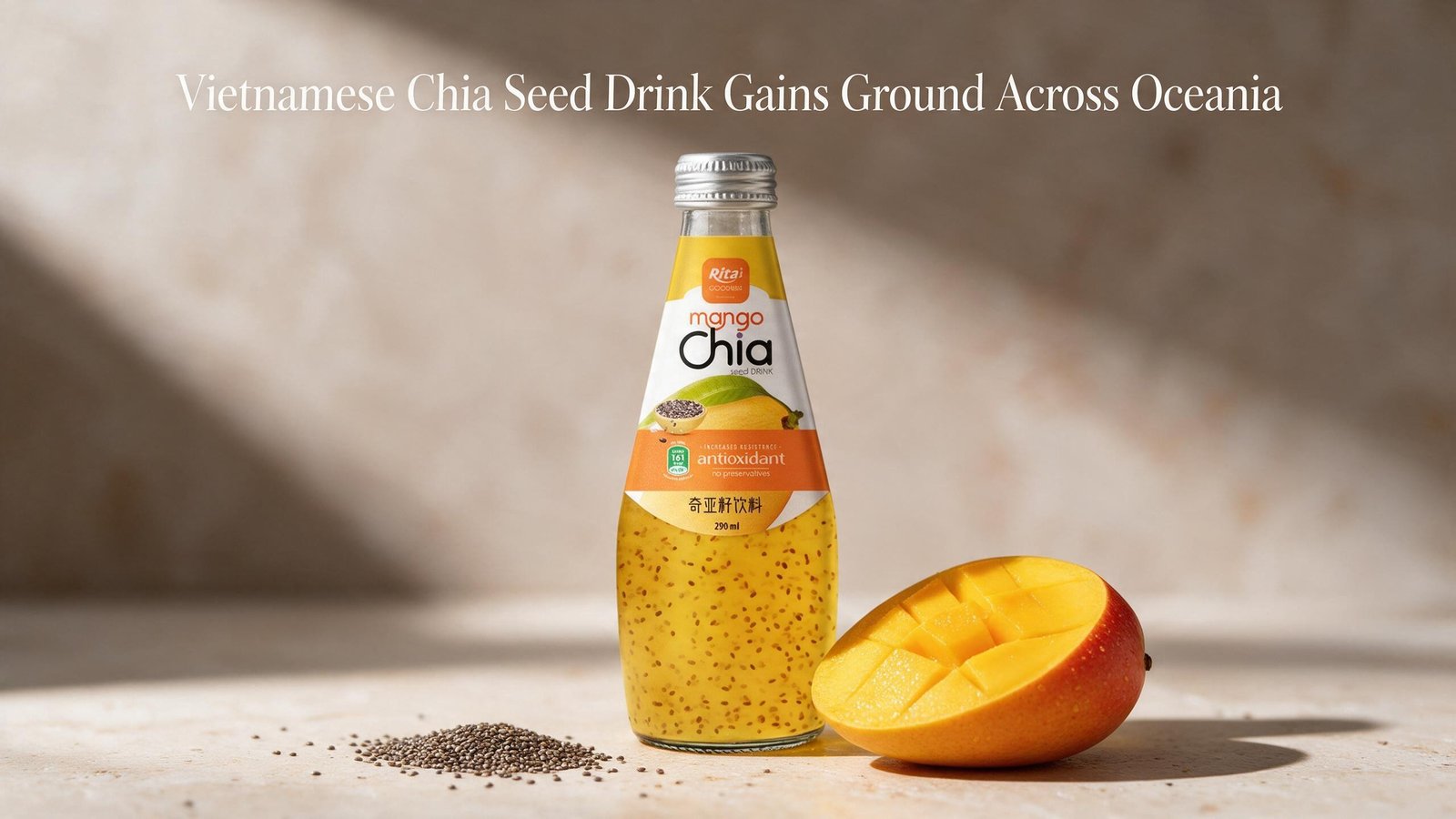
Vietnamese beverage exports are reshaping shelf space across Australia, New Zealand, Fiji and Papua New Guinea, and ready-to-drink seed beverages are riding that wave. Among the products drawing importer attention is the 290ml glass bottle chia seed drink with mango flavor, a tropical offering from RITA Food and Drink Co., Ltd that pairs visible chia seeds with mango puree in a premium glass format. As Oceania buyers scout differentiated SKUs for the coming season, export-ready seed drinks are emerging as a category worth watching.
Key Takeaways
- Oceania importers are widening their Asian beverage portfolios beyond traditional juice lines.
- Glass bottle formats signal premium positioning for seed-based ready-to-drink beverages.
- Vietnamese manufacturers offer scale, certifications and private label flexibility for regional buyers.
- Mango-flavored chia drinks align with tropical flavor demand across Pacific Island markets.
- Export documentation and food safety certifications remain decisive in distributor selection.
Oceania Beverage Imports Shift Toward Seed-Based Drinks
Import data and distributor interviews point to a quiet but steady expansion of seed-based beverages in Oceania retail and food service channels. Supermarket buyers in Australia and New Zealand have been adding chia and basil seed drinks alongside cold-pressed juices, while Pacific Island distributors in Fiji and Papua New Guinea are seeking shelf-stable tropical flavors that travel well across long supply routes.
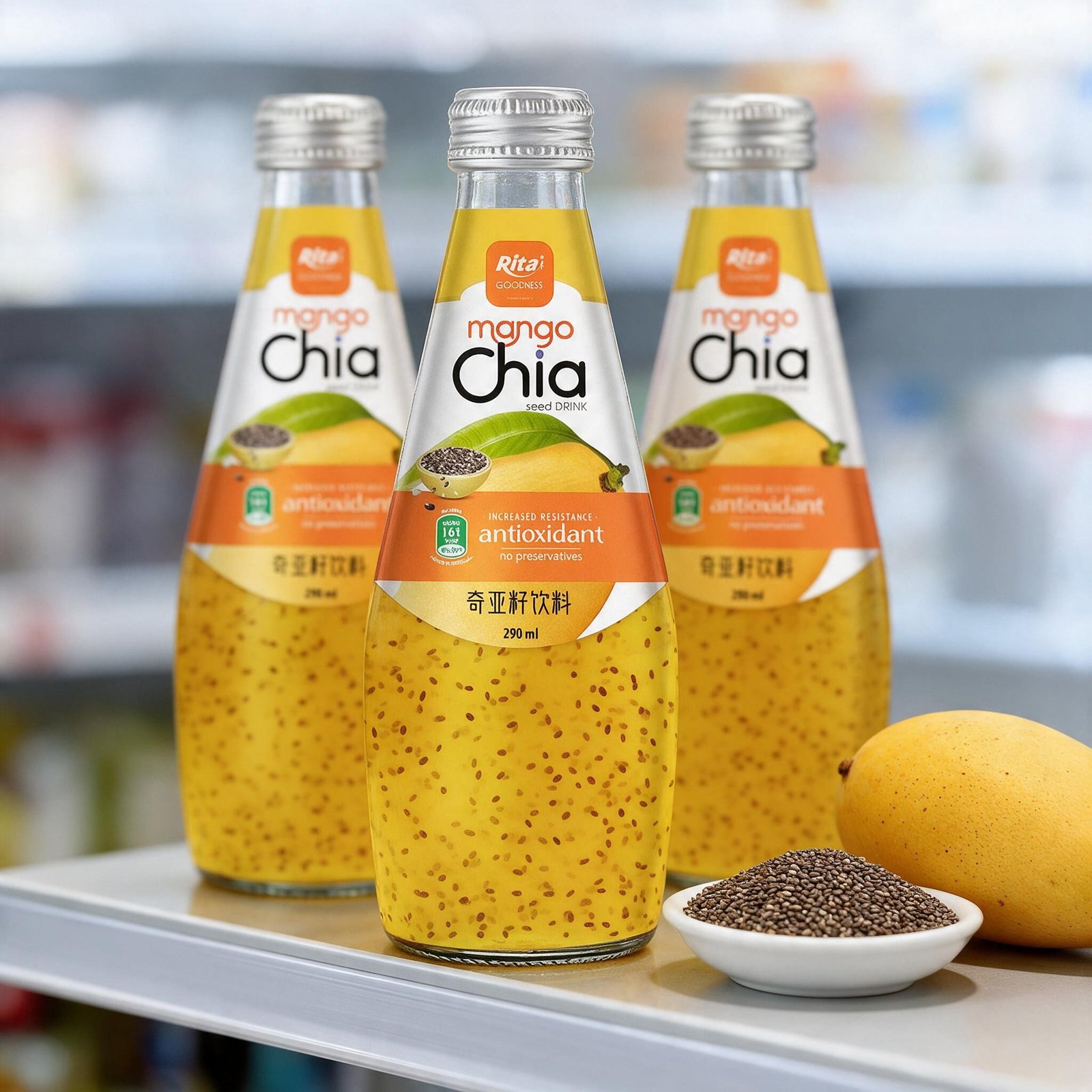
The 290ml glass bottle chia seed drink with mango flavor fits that brief precisely. Its clear glass bottle showcases suspended seeds, a visual cue that signals ingredient transparency to shoppers accustomed to reading labels closely. For buyers, visible seeds reduce the need for explanatory marketing on shelf.
Category analysts note that seed drinks occupy a middle ground between indulgent sodas and strictly functional tonics. That positioning lets retailers merchandise them in multiple zones, from the juice chiller to the grab-and-go refrigerator near checkout.
Why Glass Packaging Appeals to Premium Buyers
Glass remains the format of choice for brands targeting premium tiers. It conveys a sense of quality, seals in aroma, and photographs well for e-commerce listings. In Oceania, where private label and specialty importers compete on perceived value, the 290ml glass bottle chia seed drink with mango flavor offers a presentation that stands apart from PET-bottled alternatives.
Distributors also appreciate that glass is widely recyclable across Australian and New Zealand municipal programs, a consideration that factors into buyer scorecards even without formal sustainability claims.
Inside the Product Profile and Export Readiness
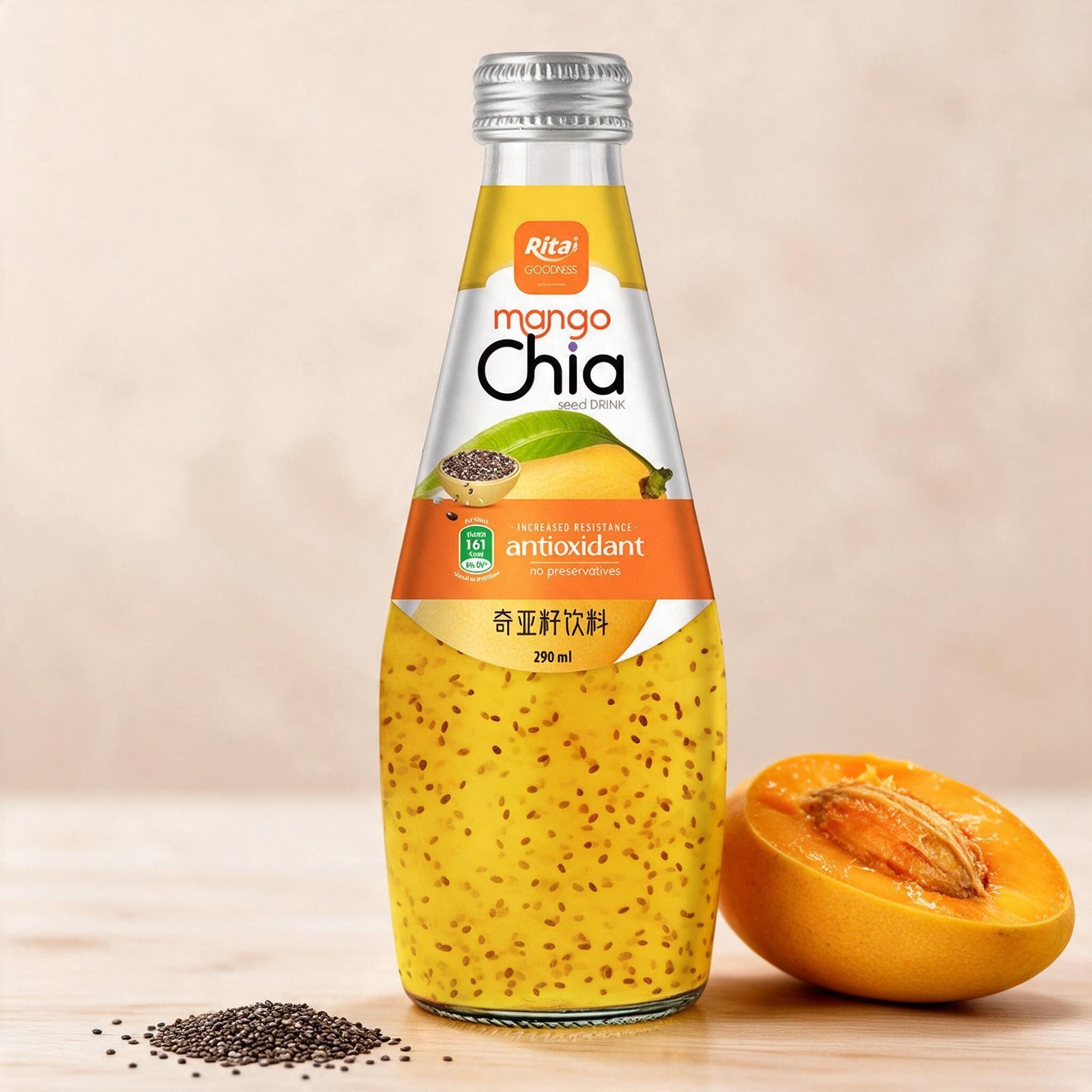
The beverage combines premium chia seeds with natural mango puree, delivering a tropical sweetness and a distinctive mouthfeel from the gel-like texture the seeds create once suspended. The clear bottle reveals black seeds against a golden mango-toned liquid, an aesthetic that reads as fresh and minimally processed to consumers.
Each unit contains 290ml, a single-serve volume that suits convenience retail, airline catering and hotel minibar placements. The label design features mango imagery and chia seed visuals alongside multilingual text, reflecting the product's readiness for multi-market distribution.
Certifications That Clear Regulatory Hurdles
Oceania importers scrutinize food safety documentation before signing purchase orders. RITA's portfolio carries BRC, FSSC 22000, Halal Jakim, Halal HCA-GCC, Kosher, ISO, GMP, HACCP and SMETA certifications, credentials that streamline compliance conversations with Australian and New Zealand border agencies as well as Pacific Island regulators.
For buyers evaluating suppliers, a consolidated certification dossier shortens due diligence cycles. It also positions the manufacturer favorably when distributors pitch the product to halal-certified retail chains across Southeast Asia-Pacific corridors.
| Attribute | Specification |
|---|---|
| Volume | 290 ml |
| Packaging | Clear glass bottle with screw cap |
| Primary ingredients | Chia seeds, mango puree |
| Format | Ready-to-drink, single serve |
| Target markets | Australia, New Zealand, Fiji, Papua New Guinea |
Full product specifications for the mango chia seed drink in a 290ml glass bottle are available through the juice9.com catalog, where importers can review packaging details and request quotations.
From Our Orchards Raw Material Farms
Ingredient sourcing underpins the flavor consistency that export buyers demand across production runs. RITA maintains long-term relationships with Vietnamese growers to secure fruit at harvest quality, and the company documents these supply chains in its field reporting.
The company's mango farm sourcing program traces fruit selection from orchard to processing, giving buyers visibility into the origin of the mango puree used in tropical blends.
Broader raw material procurement draws on the Mekong Delta fruit sourcing region, a fertile zone that supplies a range of tropical fruits for beverage production.
Video documentation of these sourcing operations is available at https://www.youtube.com/watch?v=p0KepUByHL4
OEM and Private Label Opportunities for Regional Distributors
RITA Food and Drink Co., Ltd, established in 2004, operates as a Vietnamese OEM and ODM beverage manufacturer exporting to more than 200 countries and territories. The company runs over 50 automated production lines and ships more than 1,200 containers monthly, capacity that matters for Oceania distributors planning multi-container rollouts.
Private label programs let regional brands co-develop recipes, label artwork and bottle formats without capital expenditure on production assets. For a New Zealand specialty grocer or a Fiji-based importer, that model compresses time to market considerably.
Matching SKUs to Market Preferences
Australian urban retailers gravitate toward glass-bottled seed drinks for premium chillers, while New Zealand's convenience channel favors compact single-serve formats that fit grab-and-go merchandising. In Papua New Guinea and Fiji, tropical flavor profiles such as mango travel well and align with established palate preferences.
Buyers exploring the wider seed drink assortment can review the full chia and basil seed drink collection on juice9.com to compare flavors and pack formats before committing to container orders.
Logistics, Lead Times and Documentation for Oceania Routes
Shipping from Vietnamese ports to Brisbane, Auckland, Suva and Port Moresby involves transit windows that range from roughly one to three weeks depending on routing and transshipment points. Glass packaging adds weight, so freight cost per unit runs higher than PET equivalents, a factor importers typically offset through premium retail pricing.
Export documentation packages usually include certificates of origin, phytosanitary statements where applicable, and the food safety certifications listed above. RITA's established export infrastructure handles these requirements routinely across its global customer base.
Seasonality and Order Planning
Tropical fruit availability influences production scheduling. Mango harvest periods in Vietnam shape when puree-based SKUs run at full capacity, and forward planning helps distributors align promotional calendars with consistent supply.
Importers considering a trial order alongside broader portfolio expansion often start with mixed containers, combining the mango chia seed drink with complementary lines from the fruit drink catalog to test shelf performance across multiple price points.
Market Context and Industry Signals
Global beverage dealmaking continues to reshape competitive landscapes. Heineken's acquisition of Better Drinks in Brazil, a beer and yerba-mate company, underscores how multinational players are broadening their non-traditional beverage exposure. Meanwhile, Zevia raised its full-year forecast after a strong third quarter, a signal that better-for-you soda alternatives retain momentum with consumers.
Corporate governance stories also remain in focus, with Castel's boardroom dispute ongoing and Super Bock elevating its CFO to chief executive. On the consolidation side, a Russian firm has reportedly sought control of Coca-Cola HBC's regional assets, developments that keep large-scale bottling networks in the headlines.
For smaller exporters and regional distributors, these moves matter because they influence shelf negotiations, slotting expectations and the pace at which retailers refresh imported beverage lineups. A diversified supplier base, including agile Vietnamese manufacturers, gives buyers negotiating leverage.
Competitive Positioning at Retail
Against carbonated soft drinks, seed beverages compete on ingredient story and visual differentiation rather than price. Against cold-pressed juices, they offer longer ambient stability and a distinct texture. That combination gives the 290ml glass bottle chia seed drink with mango flavor a defensible niche as retailers seek variety without proliferating near-identical juice SKUs.
Category benchmarks suggest that tropical flavors continue to outperform in Pacific Island markets, where mango, passion fruit and pineapple profiles resonate with local taste preferences and tourist-driven hospitality channels alike.
How Importers Can Evaluate the Opportunity
Procurement teams typically begin with a sample assessment, reviewing taste, seed suspension stability, label legibility and cap integrity after simulated transit. Shelf-life data and storage temperature ranges follow, then commercial terms covering minimum order quantities and payment structures.
Product pages such as the 290ml mango chia seed drink listing provide the baseline specifications buyers need before opening supplier conversations. From there, direct engagement with the manufacturer's export team clarifies customization scope, lead times and documentation support.
For Oceania's evolving beverage landscape, seed-based drinks in premium glass packaging represent a category with room to grow. Importers who move early on supply relationships position themselves to capture shelf space before the segment becomes crowded.
Frequently Asked Questions
What is the 290ml glass bottle chia seed drink with mango flavor?
It is a ready-to-drink beverage from RITA combining chia seeds and natural mango puree in a 290ml clear glass bottle, designed for single-serve consumption across retail and food service channels.
Which Oceania markets import this product?
The product targets Australia, New Zealand, Fiji and Papua New Guinea, alongside broader export coverage reaching more than 200 countries and territories worldwide.
What certifications support export compliance?
RITA holds BRC, FSSC 22000, Halal Jakim, Halal HCA-GCC, Kosher, ISO, GMP, HACCP and SMETA certifications, documentation that importers use during regulatory and retailer onboarding processes.
Can distributors order private label versions?
Yes. RITA offers OEM and ODM services, enabling regional buyers to develop custom recipes, label designs and packaging formats tailored to their brand positioning.
Where can buyers view the full product details?
Specifications, imagery and ordering information are published on the juice9.com product page for the 290ml mango chia seed drink.