Dragon Fruit Juice Supply Chain Powers Oceania Beverage Demand
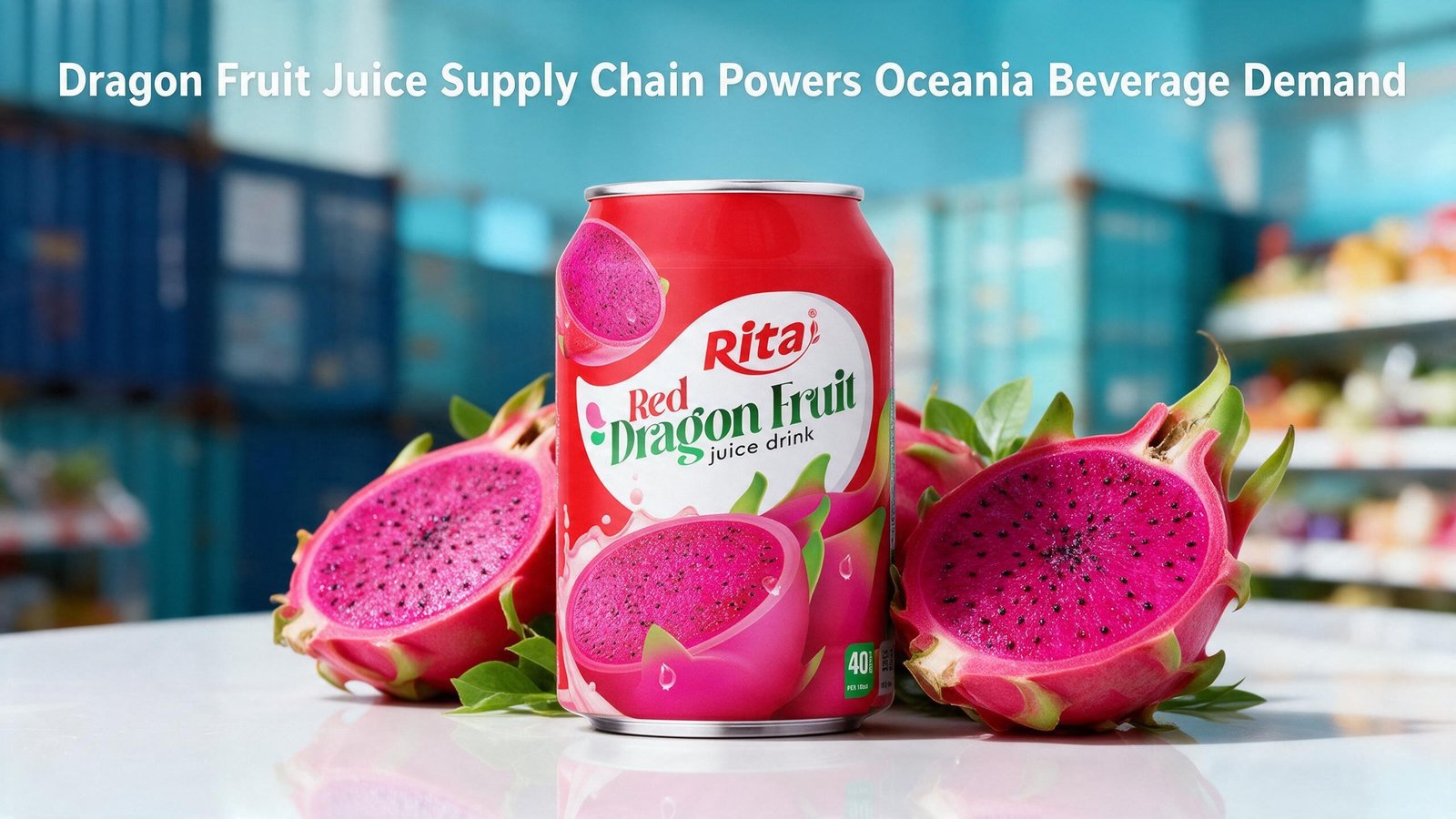
The dragon fruit juice supply chain connecting Vietnam's orchards to shelves across Australia, New Zealand, Fiji and Papua New Guinea is drawing fresh attention from importers and retailers. As demand for exotic, minimally processed fruit beverages grows across Oceania, manufacturers with vertically integrated sourcing and certified export infrastructure are positioned to capture a larger share of the regional market. One Vietnamese producer at the center of this shift is RITA Food and Drink Co., Ltd, whose 330ml short can of dragon fruit juice exemplifies how farm-to-can traceability and large-scale OEM capacity are reshaping beverage trade routes into the Pacific.
Key Takeaways
- Dragon fruit juice is emerging as a high-margin exotic SKU for Oceania retailers seeking clean-label fruit beverages.
- Vertically integrated sourcing from Binh Thuan gives manufacturers tighter control over flavor consistency and lead times.
- Certified export infrastructure (BRC, FSSC 22000, Halal, Kosher) is now a baseline requirement for entering Australian and New Zealand retail channels.
- Aluminum can packaging supports shelf-life stability and suits the single-serve consumption patterns dominant in Pacific island markets.
- Large-scale OEM and private label capacity allows brands to launch dragon fruit SKUs without capital investment in production.
Exotic Fruit Beverages Find a Foothold in Oceania Retail
Consumer shelves in Sydney, Auckland and Suva are increasingly stocked with fruit juices that go beyond the traditional orange and apple lineup.
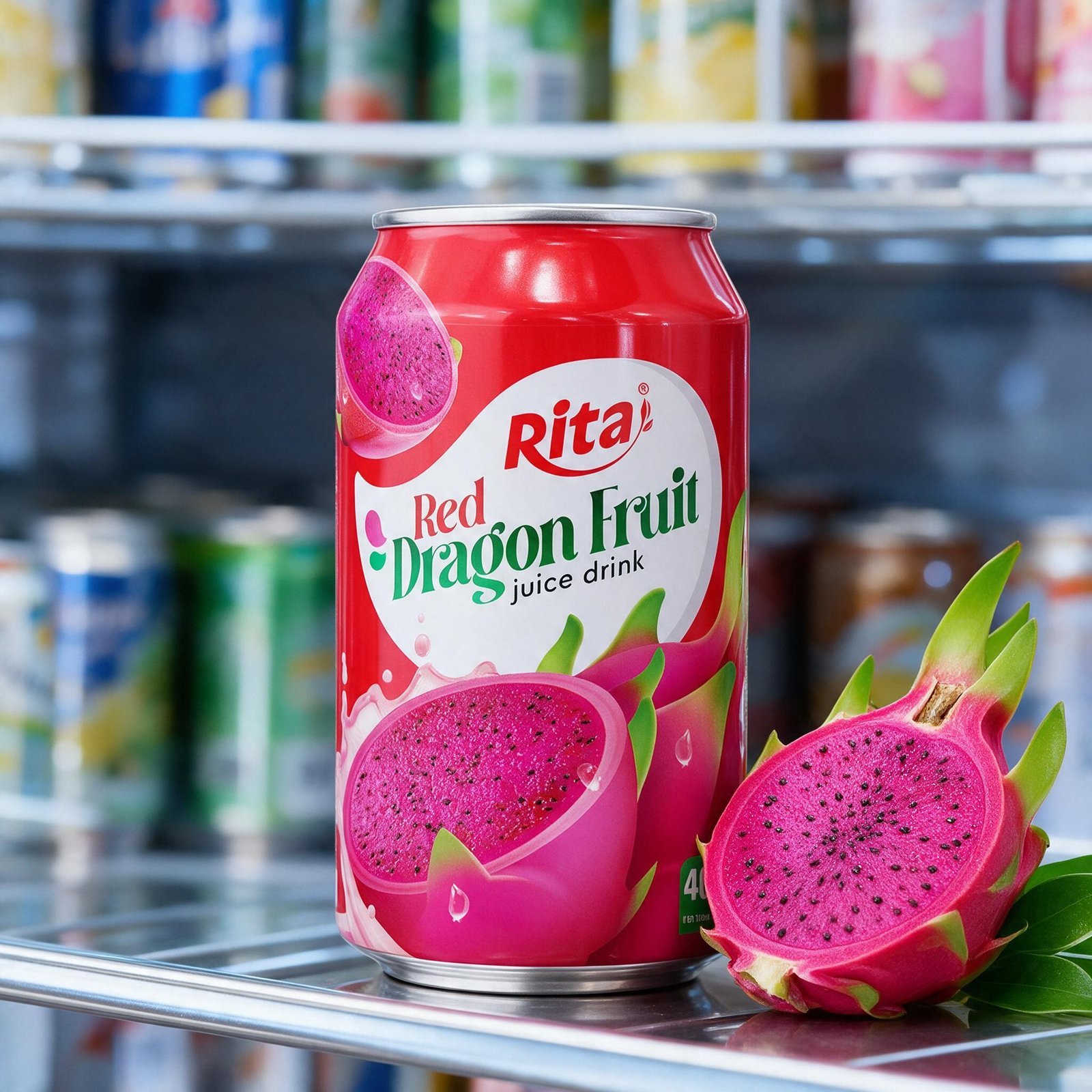
Dragon fruit, with its vivid pink flesh and mild sweet-tart profile, has moved from novelty ingredient to standalone beverage flavor. Retail buyers across Australia and New Zealand report steady interest in single-serve cans that deliver an unfamiliar taste without added complexity. The 330ml short can format aligns neatly with grab-and-go merchandising, a format that performs well in convenience stores and transit retail across the Pacific islands. For Fiji and Papua New Guinea specifically, compact packaging that survives warm-chain distribution is a practical purchasing criterion rather than a marketing preference.
Why Dragon Fruit Appeals to Regional Buyers
Flavor distinctiveness is the primary commercial driver. Unlike commodity citrus juices, dragon fruit offers a visual and taste profile that stands out on a crowded shelf. The fruit's naturally moderate sweetness, carried through in juice form, suits palates that have grown accustomed to lower-sugar beverage options. Its black seeds add a subtle textural cue that consumers associate with genuine fruit content rather than flavoring. For private label programs, this translates into a product that photographs well, reads as premium, and requires minimal explanatory copy at point of sale.
Market observers also note the role of social media in accelerating adoption. Dragon fruit's photogenic color makes it a natural fit for digital content, and beverages featuring the fruit tend to earn higher engagement in lifestyle channels. That visibility feeds back into retail sell-through, creating a feedback loop that importers are eager to capitalize on.
From Farm to Can, Tracing the Dragon Fruit Supply Chain
Reliable supply begins in the field, and Vietnam's Binh Thuan province remains one of the region's most established dragon fruit growing areas.
Manufacturers that maintain direct relationships with growers in this corridor gain advantages in raw material consistency, harvest scheduling and price stability. The Binh Thuan dragon fruit raw material area supplying RITA's premium beverages illustrates this approach, with sourcing teams monitoring orchard conditions and fruit maturity before pulp enters production. Control at this stage matters because dragon fruit flavor varies with ripeness, and inconsistent input would undermine the taste profile that buyers sample during procurement.
Downstream, the pulp is processed into a natural juice base with no added sugars or artificial additives, then filled into aluminum cans that protect the contents from light and oxygen. This packaging choice extends shelf stability during ocean freight to Oceania ports, reducing the need for cold-chain logistics and lowering landed cost for distributors. The result is a supply chain that spans orchard, cannery and container ship with minimal handoff risk.
For buyers evaluating suppliers, the ability to document each stage of this journey is increasingly a differentiator. Traceability documentation supports compliance reviews by Australian and New Zealand import authorities and provides retail partners with the provenance stories their customers expect.
Certification and Packaging Standards Shaping Export Decisions
Entering Oceania's retail channel requires more than an appealing flavor; it demands a documented quality system.
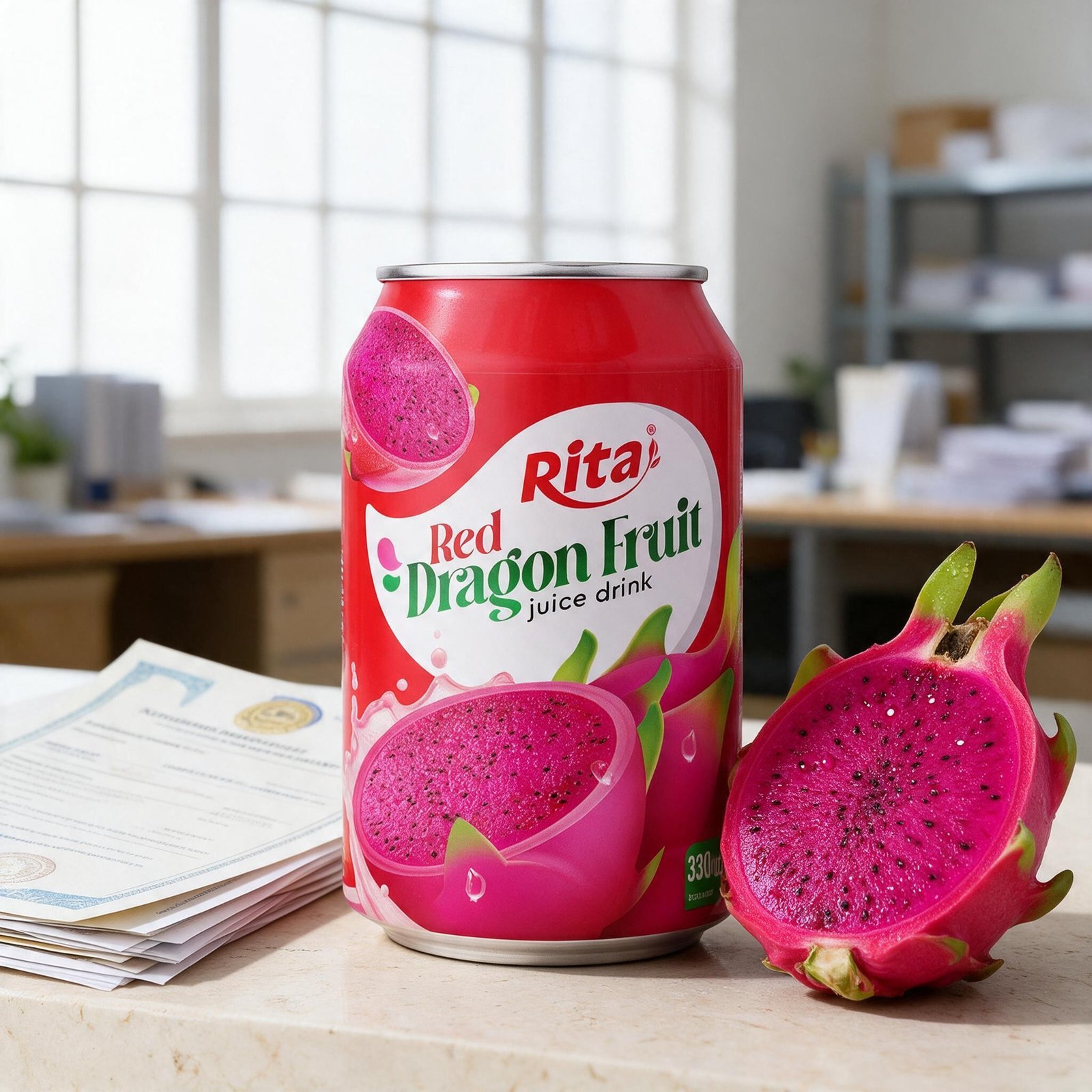
Procurement teams in Australia and New Zealand routinely request evidence of food safety certification before listing a new beverage SKU. RITA's portfolio carries BRC, FSSC 22000, Halal Jakim, Halal HCA-GCC, Kosher, ISO, GMP, HACCP and SMETA credentials, a combination that clears most retailer gatekeeping requirements in one pass. For Pacific island markets where Halal recognition carries additional weight, the dual Halal certifications remove a common sourcing obstacle.
Aluminum Cans and the Single-Serve Opportunity
The 330ml short can is a deliberate format choice with commercial consequences.
Aluminum's barrier properties preserve flavor integrity across long transit legs, and the can's recyclability aligns with packaging expectations increasingly embedded in Australian and New Zealand procurement policies. Single-serve sizing matches the consumption occasions that dominate convenience and foodservice channels, from office refrigerators in Auckland to roadside kiosks in Port Moresby. Compared with glass or PET alternatives, cans also reduce freight weight per unit, a meaningful factor when shipping to remote Pacific destinations where logistics costs are amplified.
| Packaging Format | Barrier Protection | Transit Weight | Recyclability Perception |
|---|---|---|---|
| 330ml Aluminum Can | High (light + oxygen) | Low | Strong in AU/NZ |
| Glass Bottle | High | High | Moderate |
| PET Bottle | Moderate | Low | Moderate |
OEM Capacity and Private Label Pathways for Oceania Brands
For regional distributors, the fastest route to a dragon fruit SKU is often a private label partnership rather than in-house production.
RITA Food and Drink Co., Ltd, established in 2004, operates more than 50 automated production lines and exports over 1,200 containers monthly to buyers in more than 200 countries and territories. That scale gives Oceania importers access to OEM and ODM programs that can move from brief to first shipment within a compressed timeline. The company's OEM beverage manufacturing service covers formulation, packaging selection and label design, while its broader fruit juice product range provides a reference catalog for buyers exploring adjacent flavors alongside dragon fruit.
Capacity matters in this category because dragon fruit harvests are seasonal, and spot purchasing during peak demand can expose buyers to price volatility. A manufacturer with standing orchard relationships and buffered inventory can smooth those fluctuations, offering contracted pricing that supports multi-year retail listings. For a supermarket buyer in Melbourne or a distributor in Port Moresby, that predictability often outweighs marginal unit-cost differences between suppliers.
The dragon fruit juice in a 330ml short can serves as a tangible reference point for buyers assessing this supply model, combining farm-sourced pulp, certified processing and export-ready packaging in a single specification. Additional fruit drink options on juice9.com allow procurement teams to compare formats and flavors within one catalog.
Market Context, Trade Currents and What Comes Next
Broader beverage industry movements provide useful context for dragon fruit juice's trajectory into Oceania.
Recent headlines underscore how quickly ownership and leadership shifts can reshape regional distribution networks. Castel's governance dispute continues to unfold in France, Super Bock promoted its CFO to chief executive, a Russian firm is seeking control of Coca-Cola HBC's assets, Heineken expanded in Brazil by acquiring beer and yerba-mate company Better Drinks, and Zevia lifted its forecast after a strong third-quarter performance. While these stories center on alcohol and carbonated segments, they signal an industry in motion, where buyers are actively re-evaluating supplier rosters and category mixes.
Against that backdrop, exotic fruit juices offer a lower-risk entry point for Oceania retailers looking to refresh their beverage walls without overhauling core listings. The dragon fruit juice category benefits from Vietnam's established export corridors into the Pacific, mature canning infrastructure, and a growing consumer appetite for flavors that feel both adventurous and approachable. Supply chain reliability, not novelty alone, will determine which brands hold shelf space three years from now.
For importers weighing their next move, the practical question is whether a supplier can deliver consistent flavor, certified quality and predictable volume across a full contract term. The dragon fruit juice product page outlines the specification details procurement teams typically request, from ingredient sourcing to can dimensions, offering a starting point for commercial conversations.
Frequently Asked Questions
Where does the dragon fruit for this juice come from?
The dragon fruit is sourced from established growing areas in Vietnam, including the Binh Thuan province raw material region, where manufacturer RITA Food and Drink Co., Ltd maintains direct relationships with orchard suppliers to ensure consistent fruit maturity and flavor.
What packaging is used for the 330ml dragon fruit juice?
The juice is filled into 330ml aluminum short cans, which protect the beverage from light and oxygen during storage and ocean freight, supporting shelf stability for export markets across Oceania.
Which certifications support export to Australia and New Zealand?
The manufacturing facility holds BRC, FSSC 22000, Halal Jakim, Halal HCA-GCC, Kosher, ISO, GMP, HACCP and SMETA certifications, covering the documentation typically required by Oceania retail and import compliance reviews.
Can Oceania distributors order this juice under a private label?
Yes. RITA offers OEM and ODM programs with more than 50 automated production lines and monthly exports exceeding 1,200 containers, allowing regional brands to launch dragon fruit juice SKUs without investing in their own production facilities.
Is the juice sweetened with added sugars?
No. The product is made from fresh dragon fruit pulp blended into natural juice, with no added sugars or artificial additives, preserving the fruit's inherent sweet-and-sour flavor profile.