Passion Fruit Juice Short Can Gains Export Momentum Across Oceania
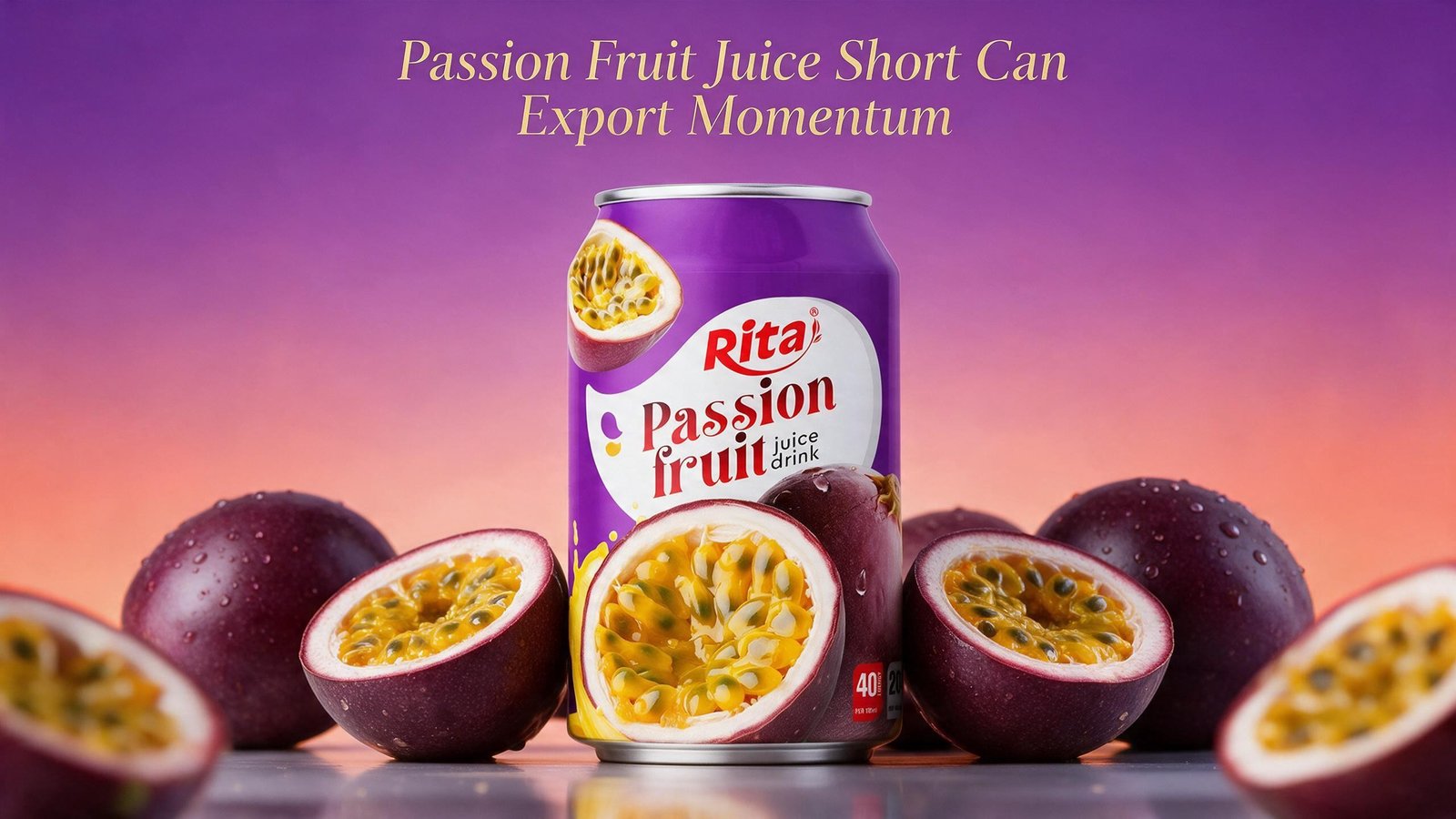
The global beverage trade is witnessing a quiet but steady shift toward compact, single-serve fruit juice formats, and RITA's Best Fruit Juice 330ml Short Can With Passion Fruit Flavor sits at the center of that momentum. As importers across Australia, New Zealand, Fiji, and Papua New Guinea reassess their 2026 product lineups, tropical flavor profiles in shelf-stable aluminum packaging are drawing renewed attention from distributors, retailers, and institutional buyers alike.
Key Takeaways
- RITA Food & Drink Co., Ltd exports to more than 200 countries and territories with 50+ automated production lines.
- The 330ml short can format aligns with Oceania's growing demand for portable, single-serve beverages.
- Passion fruit remains one of the fastest-rising tropical flavor profiles in the Southern Hemisphere.
- Certifications including BRC, FSSC 22000, Halal, Kosher, ISO, GMP, HACCP, and SMETA support compliance across diverse import regimes.
- Private label and OEM/ODM capabilities give regional buyers flexibility for branded or white-label launches.
Oceania Beverage Market Opens New Doors for Passion Fruit Juice
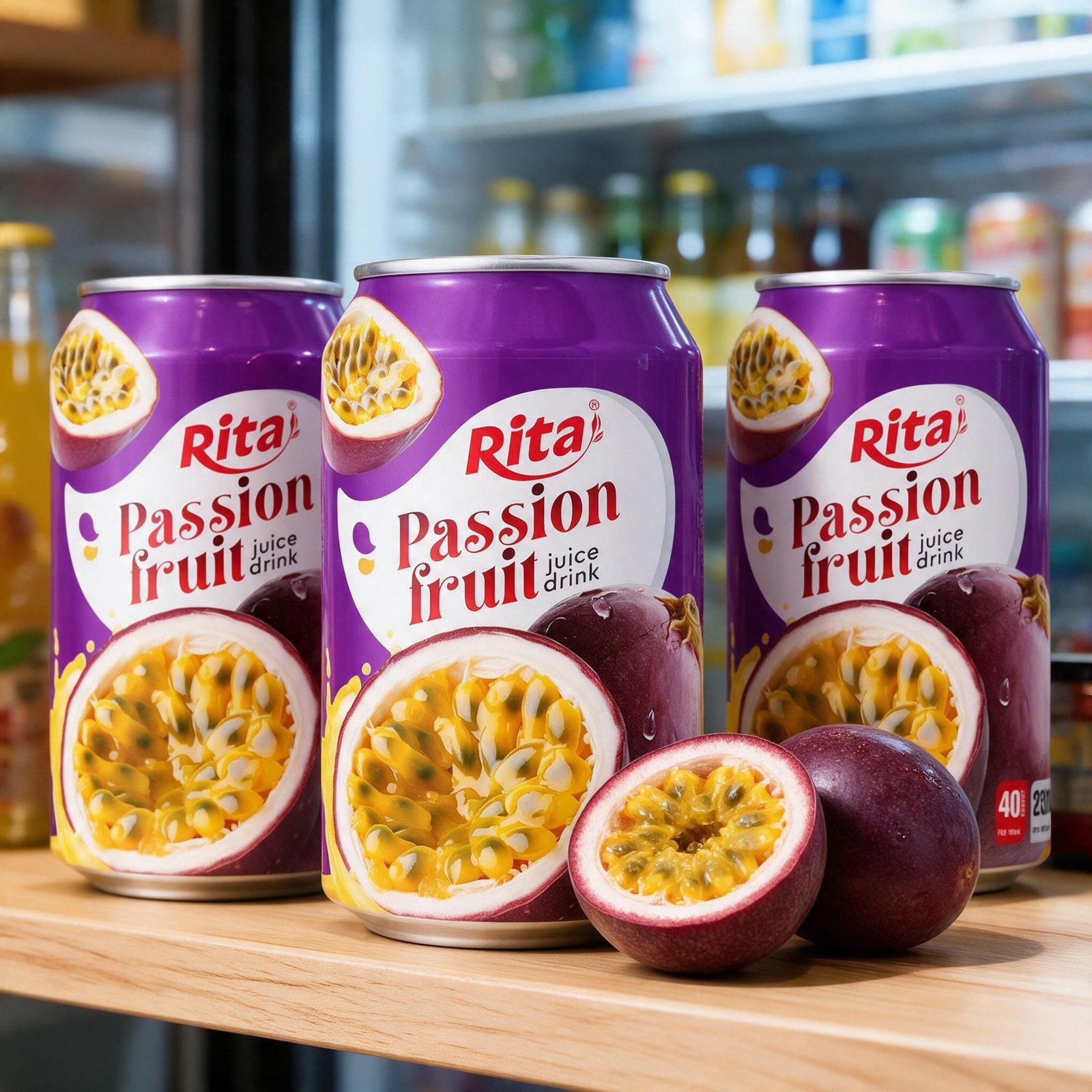
Across the Pacific, consumers are reaching for tropical flavors in formats that travel well — from Australian convenience chains to Fijian resort retailers and Papua New Guinean urban grocers. The 330ml passion fruit juice short can is positioned precisely for this environment: compact enough for grab-and-go shelves, visually distinctive with its purple-and-silver design, and durable enough to withstand long ocean freight routes into island markets.
Why the Short Can Format Wins in Island Logistics
Aluminum cans offer a decisive advantage over glass and PET in Pacific Island supply chains. They resist breakage during inter-island barge transfers, stack efficiently in refrigerated containers, and chill rapidly in tropical climates where ambient temperatures routinely exceed 30°C. For Fiji and Papua New Guinea specifically, where last-mile distribution often involves unpaved roads and manual handling, the short can profile reduces damage rates compared to taller alternatives.
RITA's packaging strategy reflects this reality. The 330ml short can was engineered as a sampling-friendly format, complementing the brand's 200ml sterilized paper box line. Buyers exploring the full range through the fruit drink catalog on juice9.com can evaluate both formats side by side before committing to container orders.
Export Infrastructure Behind the Short Can
Scale matters when entering Oceania. RITA Food and Drink Co., Ltd, established in 2004, operates a 30,000 m² production base supported by more than 100 partner farms and a workforce exceeding 500 people. The company ships over 1,200 containers monthly across its global network, with a monthly supply capacity of 300 twenty-foot containers dedicated to beverage lines — a volume that comfortably serves multi-SKU import programs for Australian and New Zealand distributors.
Behind the numbers is a manufacturing philosophy built for export. A closed-cycle production line with aseptic UHT technology processes handpicked passion fruit pulp, locking in aroma and color before filling. The result is a beverage that arrives in Sydney, Auckland, or Suva tasting consistent with the sample that cleared the buyer's initial evaluation — a non-negotiable requirement for repeat purchase orders.
Certification Stack That Clears Oceania Customs
Import compliance in Australia and New Zealand is among the most rigorous in the world, and Pacific Island nations increasingly mirror those frameworks through regional standards bodies. RITA's certification portfolio is built for exactly this kind of scrutiny:
- BRC and FSSC 22000 for food safety management
- Halal Jakim and Halal HCA-GCC for Middle Eastern and Southeast Asian distribution channels
- Kosher certification for specialty retail segments
- ISO, GMP, and HACCP for baseline quality systems
- SMETA for ethical supply chain auditing
This layered approach means a single supplier relationship can cover multiple market entry requirements — a significant efficiency gain for regional importers managing Australia, New Zealand, and Pacific Island territories simultaneously.
Passion Fruit Flavor Meets Southern Hemisphere Palates
Passion fruit has long been a familiar note in Oceania's flavor vocabulary. Grown commercially in parts of Australia and widely consumed across the Pacific, its bright acidity and aromatic sweetness translate naturally into juice beverages. The RITA short can delivers this profile without artificial additives, relying on passion fruit pulp as the primary flavor source.
From a consumption standpoint, the format suits the occasions that define modern beverage purchasing: a desk-side refreshment during a workday in Melbourne, a school canteen item in Port Moresby, or a chilled offering at a Nadi resort buffet. The 18-month shelf life further supports distributors who need to hold inventory across seasonal demand swings without write-off risk.
Taste Profile and Ingredient Transparency
Ingredient lists are increasingly a purchase driver in Oceania retail, where front-of-pack scrutiny is high. The RITA passion fruit juice keeps its formulation straightforward: passion fruit pulp, water, and sugar, with no artificial colors or preservatives declared. The naturally occurring compounds in passion fruit pulp — including vitamin C, carotenoids such as beta-cryptoxanthin and alpha-carotene, dietary fiber, iron, and potassium — are simply what the fruit brings to the can.
For buyers building private label programs, this clean baseline matters. It allows regional brands to layer their own positioning — whether emphasizing tropical provenance, school-friendly packaging, or convenience — without reformulating around hidden additives.
From Orchard to Can, Sourced Across Vietnam's Fruit Belt
Raw material sourcing underpins the consistency that export buyers demand. RITA's passion fruit supply chain draws from Vietnam's Central Highlands, where volcanic soil and a distinct wet-dry cycle produce fruit with pronounced aroma and balanced acidity. The company's passion fruit gardens in Vietnam's Central Highlands represent one node in a broader sourcing network that spans multiple fruit-growing regions.
Beyond passion fruit, RITA maintains relationships with partner farms across the Mekong Delta and other agricultural zones, ensuring a diversified ingredient base for its wider beverage portfolio. This farm-to-factory visibility gives importers confidence in traceability — an increasingly important procurement criterion in Australian and New Zealand buying processes.
For a visual walkthrough of the growing environment behind this ingredient, the company's field documentation is available here: https://www.youtube.com/watch?v=HjYZTn8BZL4
Trade Dynamics Shaping the 2026 Beverage Landscape
The broader beverage industry is in motion. Governance disputes at established players like Castel continue without resolution, while Super Bock has elevated its CFO to chief executive — signals of boardroom recalibration across the sector. Meanwhile, reports that a Russian firm is seeking control of Coca-Cola HBC assets, Heineken's acquisition of Brazilian beer and yerba-mate company Better Drinks, and Zevia's raised full-year forecast after a strong third quarter all point to an industry where portfolio agility is rewarded.
For Oceania importers, these macro moves create both risk and opportunity. Consolidation among legacy brands can tighten distribution terms, while nimble manufacturers like RITA — with dedicated OEM service capabilities — offer an alternative pathway: build a regional brand on a proven production platform without the capital outlay of in-house manufacturing.
Private Label as an Entry Strategy
Private label beverage programs have matured considerably in Australia and New Zealand, where major retail chains increasingly treat own-brand juice as a margin tool. RITA's ODM offering extends this model further, supporting buyers who need formulation input alongside packaging design and compliance documentation. The passion fruit juice short can product page serves as a starting point for buyers evaluating the base format before scoping a branded variant.
Turnaround time matters in this segment. With 50+ automated lines and a monthly export footprint exceeding 1,200 containers, RITA can scale from trial order to full container program within a single production cycle — a cadence that suits the fast refresh rhythms of Pacific retail.
Positioning the Short Can Across Distribution Channels
Channel strategy for the 330ml short can varies meaningfully across Oceania. In Australia and New Zealand, the format fits naturally into convenience, petrol, and quick-service environments where single-serve chilled beverages dominate. In Fiji and Papua New Guinea, ambient-stable cans travel more reliably through longer, less refrigerated supply chains, making them viable for traditional trade and institutional supply — schools, hospitals, and tourism operators.
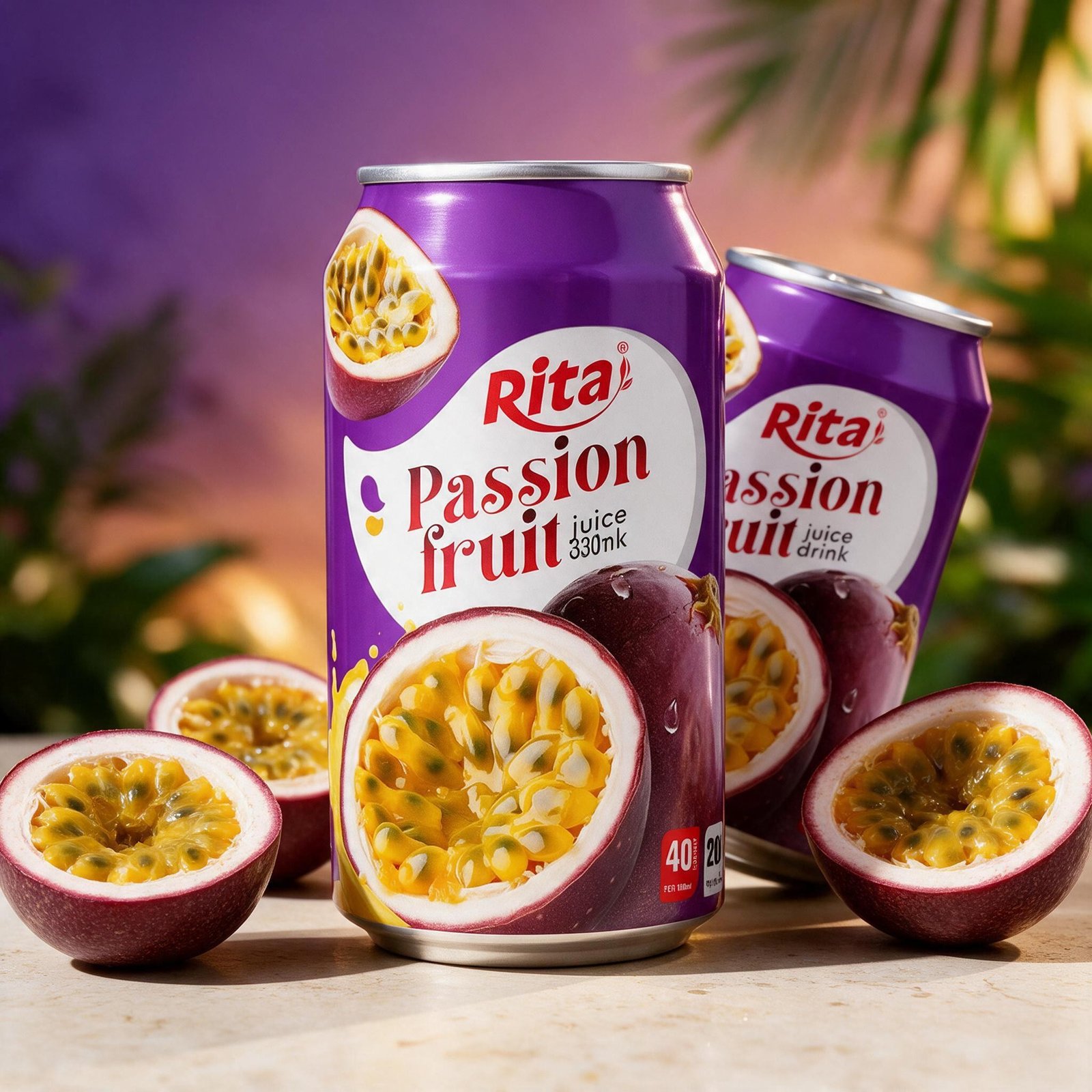
The purple can design, featuring cut passion fruit imagery and a clear "Passion fruit juice drink" callout, reads instantly at shelf. In markets where consumers scan rather than study, that visual clarity accelerates purchase decisions — particularly among younger demographics drawn to tropical flavor cues.
Building Repeat Orders Through Consistency
First orders are won on specification; repeat orders are won on consistency. RITA's aseptic processing and 18-month shelf life window give importers a stable product across shipment batches, reducing the complaint risk that erodes distributor confidence. Combined with globally recognized certifications and documented traceability from partner farms, the short can program is structured for long-term supply relationships rather than one-off trial shipments.
Frequently Asked Questions
What packaging formats are available for RITA passion fruit juice?
RITA offers the passion fruit juice in a 200ml sterilized paper box for everyday consumption and a 330ml aluminum short can designed for sampling and single-serve retail. Additional formats including PET and glass bottles are available across the broader RITA portfolio for buyers with specific channel requirements.
How does RITA support OEM and private label programs in Oceania?
RITA operates dedicated OEM and ODM service divisions that handle formulation, packaging design, labeling, and compliance documentation. Buyers in Australia, New Zealand, Fiji, and Papua New Guinea can develop branded variants on top of proven base recipes, with production scheduled against monthly container capacity of 300 twenty-foot units.
Which certifications does RITA hold for export markets?
RITA's certification stack includes BRC, FSSC 22000, Halal Jakim, Halal HCA-GCC, Kosher, ISO, GMP, HACCP, and SMETA. These credentials support customs clearance and retail listing requirements across diverse import regimes, including the stringent standards applied in Australia and New Zealand.
What is the shelf life of the 330ml passion fruit juice short can?
The product carries an 18-month shelf life from production date, supporting extended inventory planning for distributors managing seasonal demand across island and mainland markets.
Can RITA supply mixed fruit juice orders in a single shipment?
Yes. With 50+ automated production lines and more than 100 partner farms supplying raw materials, RITA routinely consolidates multiple fruit SKUs within single container shipments, allowing buyers to optimize freight costs across a diversified range.