Blended Fruit and Vegetable Drinks in Sleek Cans — A Rising Trend in the US and European Beverage Markets
The global beverage industry is witnessing a significant shift as consumers increasingly seek convenient, flavorful, and ingredient-focused options. Among the most dynamic segments is the market for blended fruit and vegetable drinks, particularly those packaged in sleek, portable cans.
This article explores the growing demand for blended fruit and vegetable drinks in sleek cans, focusing on key markets like the United States and Europe, and provides actionable insights for importers, distributors, and F&B businesses looking to capitalize on this trend.
Key Takeaways
- The demand for blended fruit and vegetable drinks in sleek cans is surging in the US and Europe, driven by health-conscious consumers and on-the-go lifestyles.
- Sleek can packaging offers distinct advantages for brands, including portability, shelf appeal, and sustainability alignment.
- Strategic partnerships with OEM/ODM manufacturers in Vietnam can provide cost-effective, high-quality production for private label and branded products.
- Understanding regional flavor preferences and regulatory requirements is critical for successful market entry.
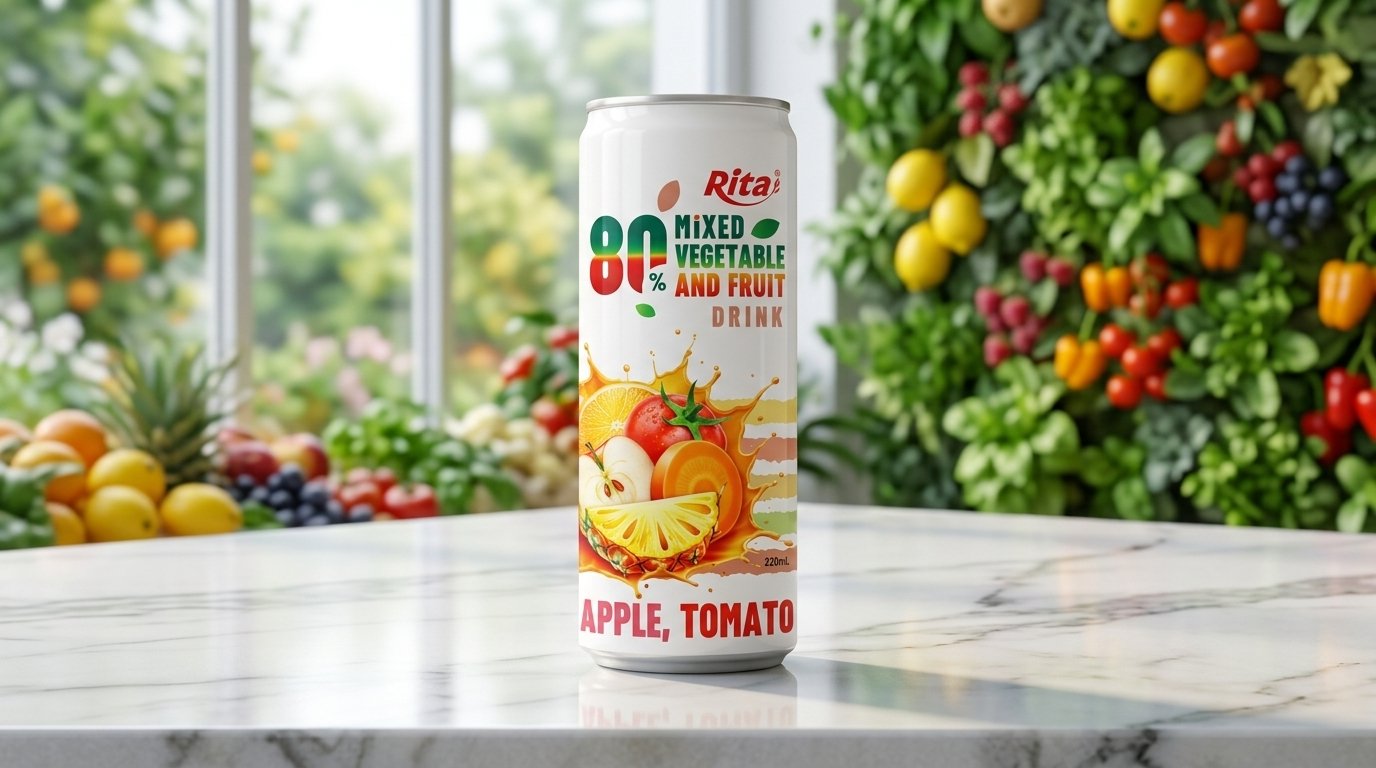
- The product format, such as the 320ml sleek can, is particularly well-suited for single-serve occasions and modern retail channels.
The Rise of Blended Fruit and Vegetable Drinks in the US Market
The United States remains one of the largest and most innovative markets for ready-to-drink beverages. Over the past five years, the category of blended fruit and vegetable drinks has expanded rapidly, moving beyond niche health food stores into mainstream supermarkets, convenience stores, and online platforms. According to market research, the US functional beverage market, which includes fruit and vegetable blends, is projected to grow at a compound annual growth rate (CAGR) of over 8% through 2030. This growth is fueled by a generation of consumers who prioritize ingredient transparency, natural flavors, and functional value without overt health claims.
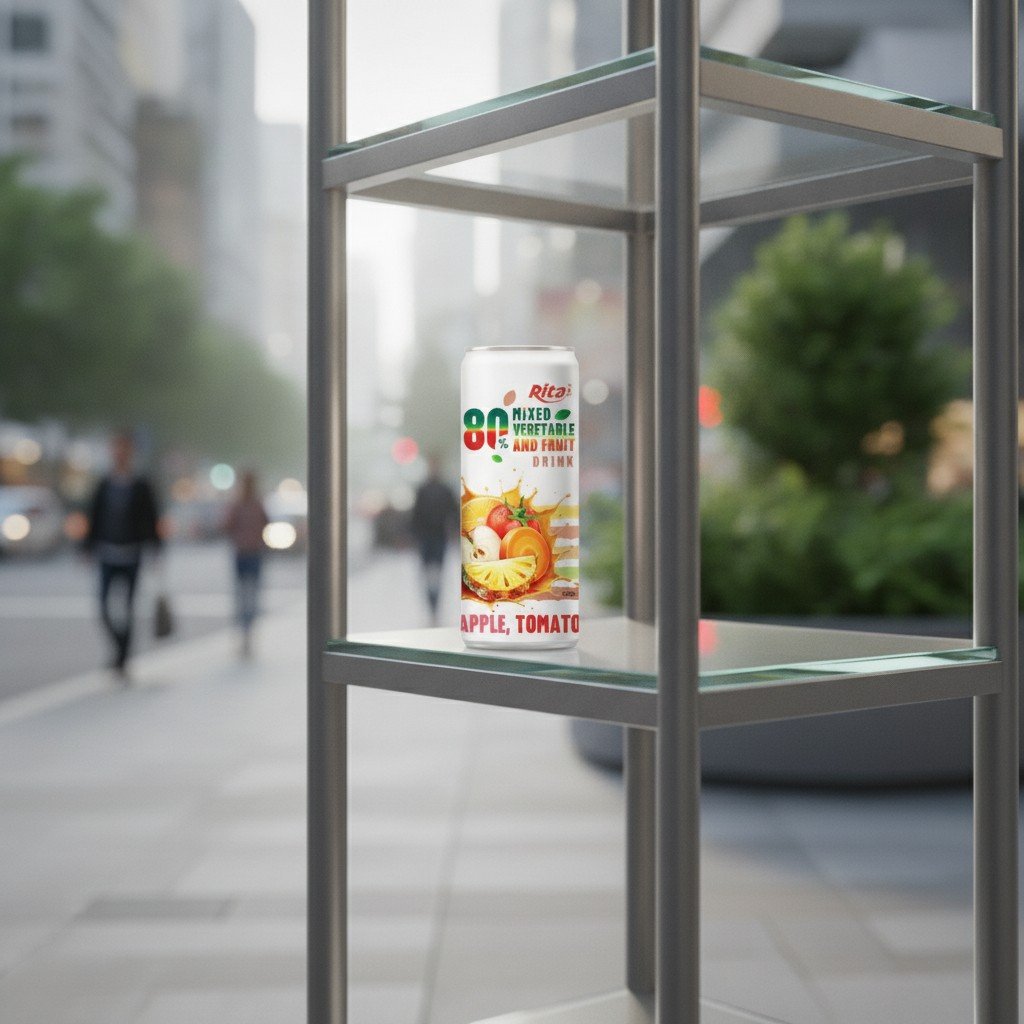
Sleek Can 320ml 80% Healthy Blended Fruit And.
One of the key drivers is the demand for convenient, single-serve packaging. The sleek can format, typically 250ml to 330ml, has become a favorite among urban professionals, students, and fitness enthusiasts. Its lightweight, durable, and recyclable nature makes it ideal for lunchboxes, gym bags, and office desks. The 320ml sleek can, in particular, offers a portion size that balances satisfaction with portability. For distributors and retailers, this format reduces shelf space requirements and simplifies logistics compared to larger bottles or cartons.
Another critical factor is flavor innovation. US consumers are adventurous, seeking unique combinations like carrot-orange-ginger, beet-apple-lemon, or green juice blends with spinach and cucumber. Products that offer a high percentage of real fruit and vegetable content, often around 80%, resonate strongly with label-reading shoppers. The ability to customize flavor profiles through OEM partnerships allows brands to differentiate themselves in a crowded market.
Opportunities for Importers and Distributors in the US
For businesses looking to import blended fruit and vegetable drinks in sleek cans, the US offers a robust distribution network. Key channels include natural food chains (e.g., Whole Foods, Sprouts), conventional grocery (e.g., Kroger, Walmart), and e-commerce giants like Amazon. Private label opportunities are also significant, as many retailers seek to develop their own branded beverage lines to capture margins and build customer loyalty. A product with a 320ml sleek can, 18-month shelf life, and certifications like USDA Organic or Non-GMO Project Verified can command premium positioning.
However, success requires careful attention to regulations. The FDA does not allow health claims on labels (e.g., “boosts immunity”), but descriptive terms like “blended” or “with real fruit juice” are acceptable. Importers must ensure compliance with labeling requirements, including ingredient lists, allergen declarations, and nutrition facts. Partnering with an experienced manufacturer like RITA Food & Drink, which holds ISO, HACCP, and organic certifications, simplifies the compliance process.
European Market Dynamics for Fruit and Vegetable Blends
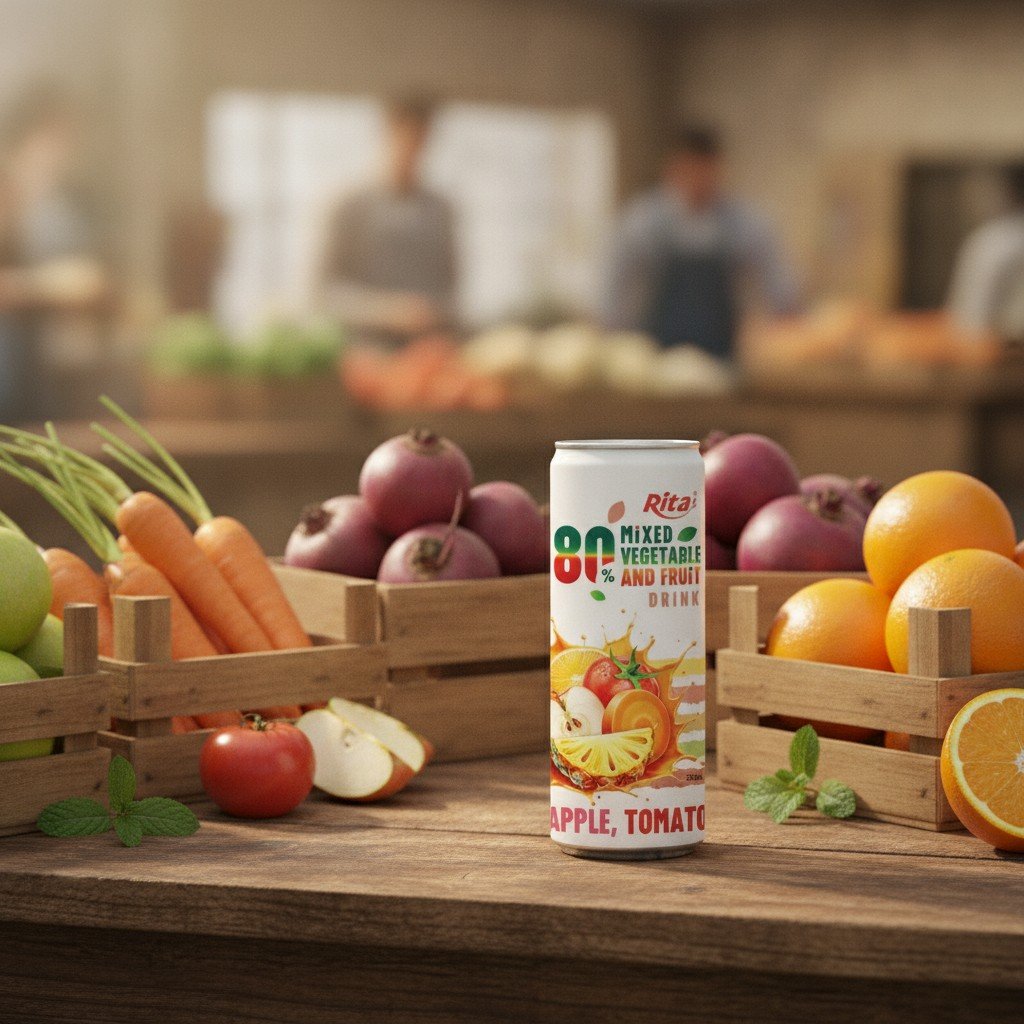
Europe represents another high-potential market for blended fruit and vegetable drinks in sleek cans. The European beverage market is mature but evolving, with consumers increasingly moving away from sugary sodas toward more natural, low-sugar alternatives. Countries like Germany, the UK, France, and the Netherlands are leading adopters of vegetable-based drinks, often incorporating ingredients like beetroot, carrot, and celery. The sleek can format is gaining traction in Europe, especially for on-the-go consumption in urban centers.
One notable trend is the rise of “cold-pressed” and “HPP” (high-pressure processing) claims, though these require specific production capabilities. For many importers, a shelf-stable product with a 18-month shelf life offers greater logistical flexibility, especially for sea freight from Asia. The 320ml sleek can is well-suited for European vending machines, office coffee shops, and grab-and-go coolers in supermarkets.
Flavor Preferences and Regulatory Considerations in Europe
European consumers tend to prefer less sweet profiles compared to their US counterparts. Blends with a higher vegetable-to-fruit ratio, such as 60% vegetable and 40% fruit, are often more successful. Popular combinations include tomato-carrot, cucumber-mint-lime, and red beet-apple. The use of natural flavors and organic ingredients is a strong selling point. Certifications like EU Organic, BRC, and FSSC 22000 are almost mandatory for mainstream retail listings.
Importers should also be aware of the EU’s Novel Food Regulation and labeling directives. While fruit and vegetable blends are generally considered conventional foods, any new ingredients (e.g., certain botanicals) may require pre-market approval. Working with a supplier that has experience exporting to Europe, such as RITA, can mitigate these risks. RITA’s production base includes a QC lab with a 40-person professional team, ensuring consistent quality across large volumes.
Why the Sleek Can Format is a Strategic Choice
The choice of packaging is a critical business decision. The sleek can, typically made of aluminum, offers several advantages over glass bottles, PET plastic, or cartons. Aluminum cans are infinitely recyclable, lightweight, and provide excellent protection against light and oxygen, preserving flavor and extending shelf life. For the 320ml size, the sleek profile fits comfortably in hand and is easy to stack for display. This format is particularly popular in the US and Europe for craft sodas, sparkling waters, and now fruit-vegetable blends.
From a supply chain perspective, aluminum cans are cost-effective to ship due to their low weight-to-volume ratio. A 20-foot container can hold approximately 25,000 to 30,000 320ml cans, depending on packaging configuration. This efficiency is attractive for importers managing freight costs. Additionally, the format allows for high-quality printing and branding, which is essential for shelf differentiation.
Customization and Private Label Opportunities
For brands entering the market, the ability to customize the product is a major advantage. OEM and ODM services enable businesses to develop unique flavor combinations, adjust sweetness levels, and design packaging that aligns with their brand identity. A product like the 320ml 80% blended fruit and vegetable drink can serve as a base for private label programs. The manufacturer’s MOQ of 200 cartons per order (with a supply ability of 300 containers per month) means even smaller importers can start with manageable volumes and scale up.
RITA’s OEM service offers end-to-end support, from concept development to production and logistics. This includes assistance with formulation, label design, and regulatory compliance for target markets. For example, a US distributor could work with RITA to create a proprietary blend featuring local fruit favorites like cranberry or blueberry, combined with vegetables like spinach or kale, all packaged in a sleek can with a custom-branded sleeve.
Supply Chain and Production Considerations
When sourcing blended fruit and vegetable drinks from Vietnam, importers should evaluate the manufacturer’s production capacity, quality control systems, and certification portfolio. RITA operates two production bases with a combined capacity of 10,000 tons per month for canned products and another 10,000 tons for PET bottles. This scale allows for competitive pricing and reliable delivery. The standard delivery time of 20-25 days after order confirmation is competitive within the industry.
Payment terms typically include L/C or T/T, and the port of loading is Cat Lai Port in Ho Chi Minh City. Importers should factor in shipping time (approximately 20-30 days to the US West Coast or Europe) and plan inventory accordingly. The 18-month shelf life provides ample time for distribution and retail sell-through.
Quality Assurance and Certifications
Certifications such as ISO, HACCP, HALAL, USDA Organic, and EU Organic are essential for market access. These certifications demonstrate compliance with international food safety and quality standards. RITA’s QC lab employs 40 professionals who conduct rigorous testing at every stage of production, from raw material inspection to finished product analysis. This reduces the risk of recalls or quality issues that could damage a brand’s reputation.
For importers targeting the US or Europe, organic certification is particularly valuable. The USDA Organic seal or EU Organic leaf can justify a premium price point and attract environmentally conscious consumers. Similarly, HALAL certification opens doors to Middle Eastern markets, while KOSHER certification may be relevant for certain US retail channels.
Market Entry Strategies for Importers and Distributors
Successfully launching a blended fruit and vegetable drink in sleek cans requires a multi-faceted approach. First, conduct thorough market research to identify target consumer segments. In the US, for example, the product could be positioned as a convenient lunchbox addition for busy parents, a post-workout refresher for fitness enthusiasts, or an office pantry staple. In Europe, emphasis on natural ingredients and low sugar content may resonate better.
Second, build a strong brand story around the product’s origin and quality. Vietnamese-sourced beverages are increasingly recognized for their quality and value. Highlighting the use of real fruit and vegetable purees, the sleek can design, and the manufacturer’s certifications can differentiate the product. Third, leverage digital marketing and e-commerce platforms to reach early adopters. Amazon, Thrive Market, and specialty online retailers are effective channels for testing new products.
Distribution Partnerships and Retail Placement
For broader distribution, partner with established food brokers or distributors who have relationships with key retailers. In the US, natural food distributors like UNFI or KeHE are gateways to natural and organic sections. In Europe, regional distributors in Germany, the UK, or Benelux can facilitate entry into major chains like Edeka, Tesco, or Carrefour. Offering a competitive wholesale price (e.g., based on the manufacturer’s FOB pricing) and providing point-of-sale materials can help secure shelf space.
Another strategy is to target the foodservice sector, including smoothie bars, juice shops, and corporate cafeterias. The 320ml sleek can is ideal for single-serve vending or grab-and-go coolers. Bulk purchasing options with a minimum order of 200 cartons make it feasible for smaller operators to test the product.
Future Outlook and Innovation Potential
The market for blended fruit and vegetable drinks in sleek cans is expected to continue its upward trajectory. As consumers become more ingredient-conscious, products with a high percentage of real fruit and vegetable content will gain favor. Innovations in flavor, such as tropical blends (mango-pineapple-carrot) or superfruit infusions (acai-blueberry-beet), can capture attention. Additionally, the sleek can format may evolve with features like resealable lids or QR codes for traceability.
Sustainability is another key driver. Aluminum cans are already among the most recycled packaging types, and brands that emphasize recyclability and responsible sourcing can build consumer trust. Manufacturers like RITA are investing in sustainable practices, such as energy-efficient production and waste reduction, which can be highlighted in marketing materials.
For importers and distributors, the time is ripe to enter this segment. By partnering with a reliable OEM manufacturer, businesses can bring high-quality, competitively priced products to market without significant upfront investment in production facilities. The 320ml sleek can, with its 80% fruit and vegetable content, offers a versatile platform for building a brand in the US, Europe, and beyond.
Frequently Asked Questions
What is the minimum order quantity for importing blended fruit and vegetable drinks in sleek cans?
The typical minimum order quantity is 200 cartons per order, with each carton containing 24 cans (320ml each). This allows importers to start with a manageable volume and scale up based on demand.
How long is the shelf life of these canned drinks?
The shelf life is 18 months from the production date, provided the cans are stored in a cool, dry place away from direct sunlight. This extended shelf life facilitates ocean freight and retail distribution.
What certifications should I look for when sourcing from Vietnam?
Key certifications include ISO, HACCP, HALAL, USDA Organic, EU Organic, BRC, and FSSC 22000. These ensure compliance with international food safety and quality standards, which are essential for market access in the US and Europe.
Can I customize the flavor and packaging for my brand?
Yes, OEM and ODM services are available. You can customize the flavor profile, sweetness level, and packaging design, including private label branding. The manufacturer provides support from concept development to production.
What are the typical payment and delivery terms?
Payment terms are usually L/C or T/T. Delivery time is 20-25 days after order confirmation, with shipping from Cat Lai Port in Ho Chi Minh City. The supply ability is up to 300 twenty-foot containers per month.