Popping Boba Bubble Fruit Pineapple Tea 250ml Cans Market Trends and Opportunities for Global Distributors
The global beverage industry is witnessing a dynamic shift toward innovative, ready-to-drink (RTD) options that combine unique textures with exotic flavors. Among the most exciting developments is the rise of bubble tea-inspired products in canned formats, offering convenience without sacrificing the signature popping boba experience.
The Popping Boba Bubble Fruit Pineapple Tea 250ml Cans represent a strategic opportunity for importers, distributors, and wholesalers targeting the USA and Southeast Asia markets. This article explores the market drivers, consumer trends, and business potential behind this product category, providing actionable insights for F&B professionals.
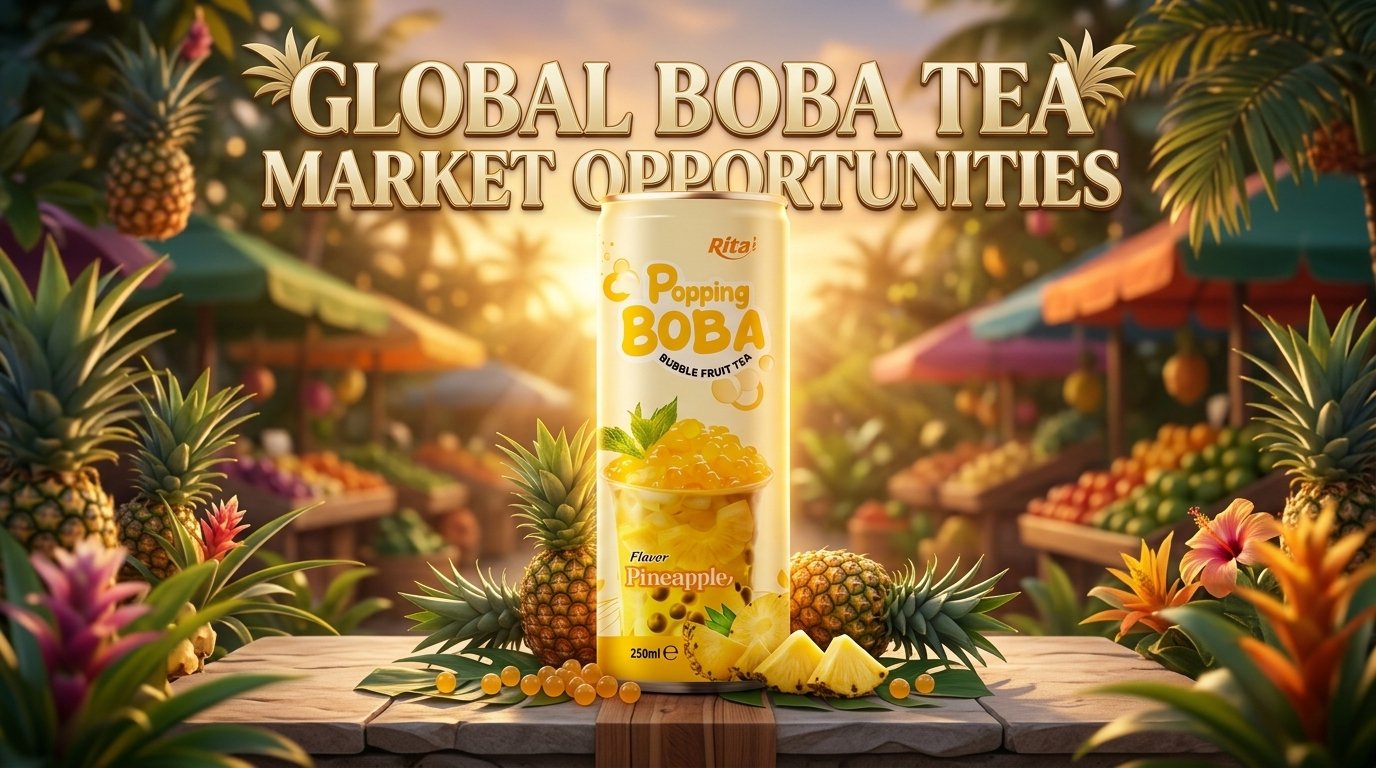
Key Takeaways
- The Popping Boba Bubble Fruit Pineapple Tea 250ml Cans capitalize on the global bubble tea craze with a shelf-stable, portable format ideal for retail and foodservice.
- USA market demand for Asian-inspired beverages is growing rapidly, driven by Gen Z and Millennial consumers seeking novel sensory experiences.
- Southeast Asia offers a mature bubble tea culture but an emerging opportunity for canned RTD variants in convenience stores and e-commerce.
- Product attributes like 18-month shelf life, 250ml aluminum can packaging, and OEM/ODM flexibility make it a low-risk, high-reward option for distributors.
- Strategic partnerships with Vietnamese manufacturers like RITA ensure competitive pricing, quality certifications, and scalable production.
Global Bubble Tea Market: A $3 Billion Opportunity in Canned RTD
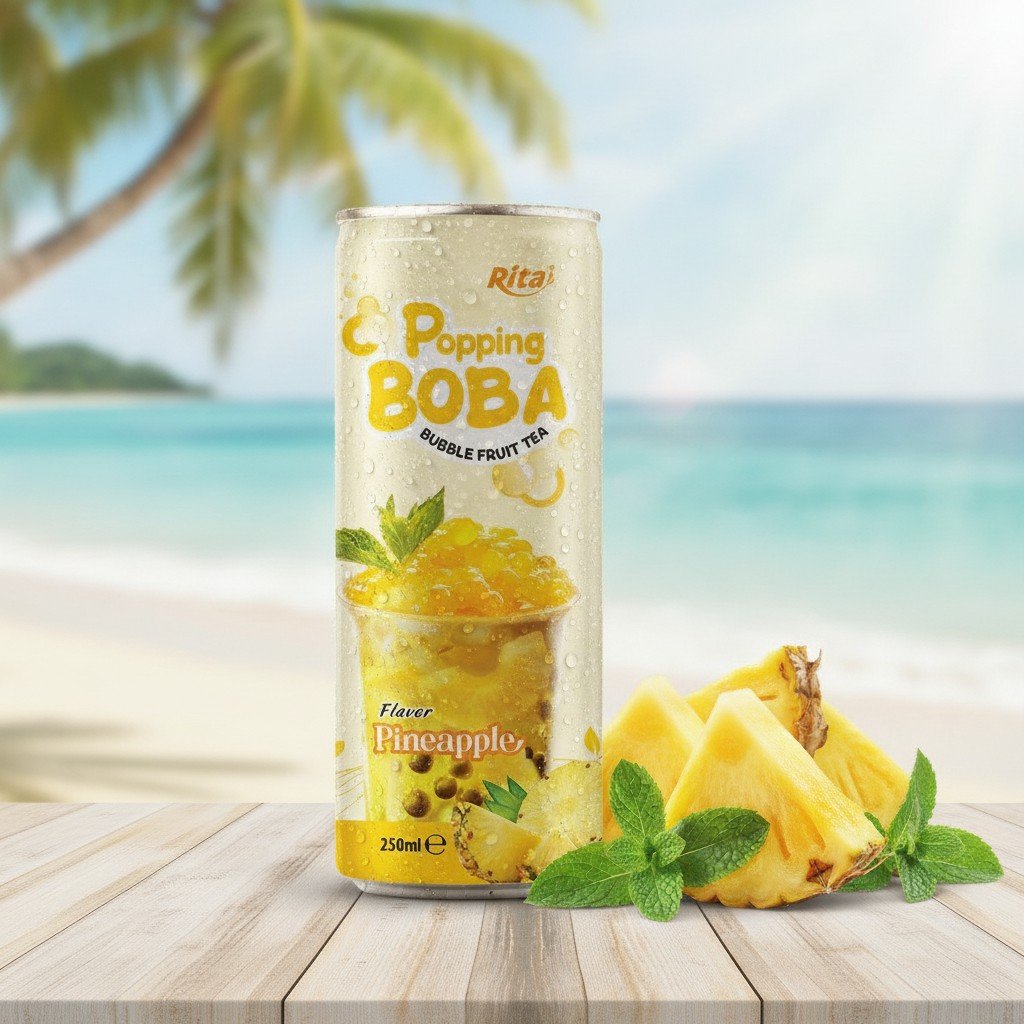
The bubble tea market, valued at over $3 billion globally in 2024, is projected to grow at a CAGR of 7-9% through 2030. While traditional bubble tea shops dominate, the canned RTD segment is emerging as a key growth driver. Consumers increasingly demand convenience—products that deliver the same popping boba experience without the need for preparation or specialized equipment. The Popping Boba Bubble Fruit Pineapple Tea 250ml Cans address this gap perfectly, offering a ready-to-enjoy beverage that can be stocked in vending machines, convenience stores, supermarkets, and office pantries.
Popping Boba Bubble Fruit Pineapple Tea 250ml Cans.
For distributors, this means tapping into a category that bridges two powerful trends: the global love for bubble tea and the shift toward on-the-go consumption. The 250ml aluminum can format is particularly attractive for single-serve occasions, from lunch breaks to travel. Moreover, the pineapple flavor adds a tropical twist that appeals to Western palates while retaining authenticity for Asian consumers. By positioning this product as a premium yet accessible option, importers can differentiate their portfolio in a crowded market.
USA Market Analysis: Asian-Inspired Beverages Go Mainstream
Consumer Trends Driving Demand
In the United States, bubble tea has transitioned from a niche Asian specialty to a mainstream phenomenon. According to industry reports, the number of bubble tea shops in the USA has grown by over 60% in the last five years, with major cities seeing an explosion of outlets. However, the canned RTD segment remains underpenetrated, presenting a first-mover advantage for early adopters. American consumers, particularly Gen Z and Millennials, are drawn to products that offer interactive elements like popping boba—a texture that adds fun and novelty to daily hydration.
Health-conscious trends also favor this product. While we avoid health claims, it's worth noting that pineapple tea is perceived as a lighter, fruit-forward alternative to sugary sodas or creamy milk teas. The Popping Boba Bubble Fruit Pineapple Tea 250ml Cans can be marketed as a refreshing treat that fits into a balanced lifestyle, without making explicit functional assertions. Distributors should emphasize the natural pineapple flavor and the real fruit juice content, which aligns with clean-label preferences.
Distribution Channels and Opportunities
The USA market offers multiple entry points for this product. Key channels include Asian grocery chains (e.g., H Mart, 99 Ranch), mainstream supermarkets (Whole Foods, Walmart, Target), convenience store chains (7-Eleven, Circle K), and online platforms (Amazon, Instacart). Additionally, foodservice operators like bubble tea shops, cafes, and college campuses can use the cans as a grab-and-go extension of their menu. For wholesalers, the product's 18-month shelf life and compact 250ml can size reduce inventory risk and simplify logistics.
Importers should also consider private label opportunities. Many US retailers are eager to launch their own bubble tea RTD lines but lack manufacturing expertise. The OEM service offered by Vietnamese manufacturers like RITA allows brands to customize flavor profiles, sweetness levels, and packaging designs, making it easier to meet local taste preferences. With a minimum order quantity of 200 cartons and competitive pricing, even mid-sized distributors can test the market without excessive commitment.
Southeast Asia Market: Capitalizing on Bubble Tea Culture
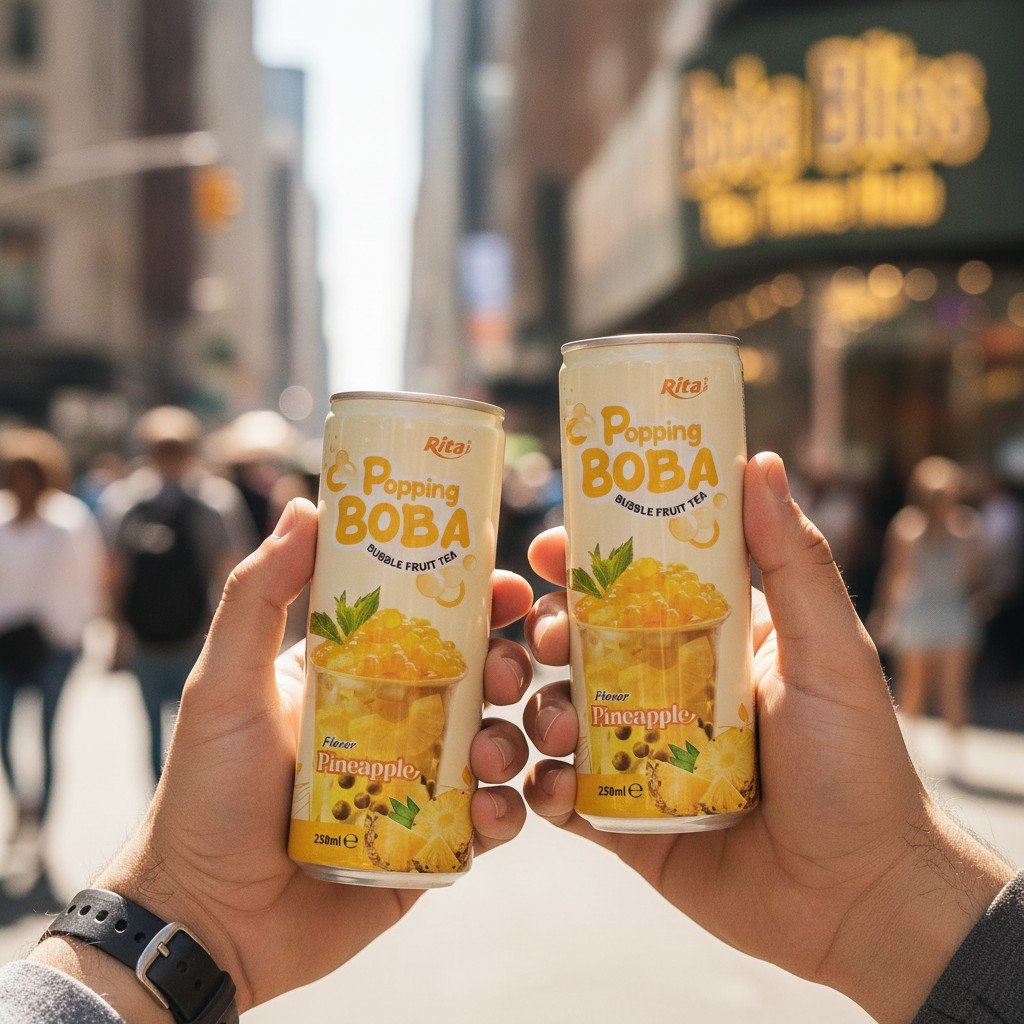
Southeast Asia is the birthplace of bubble tea, and the region remains a hotbed of consumption. Countries like Thailand, Vietnam, Indonesia, and the Philippines have deeply ingrained bubble tea cultures, with street stalls and specialty chains on every corner. However, the canned RTD segment is still nascent, offering significant growth potential. The Popping Boba Bubble Fruit Pineapple Tea 250ml Cans can tap into the convenience needs of urban consumers who want their favorite beverage without waiting in line.
Consumer Behavior in Southeast Asia
In Southeast Asia, bubble tea is not just a drink—it's a lifestyle. Young consumers in cities like Bangkok, Ho Chi Minh City, and Jakarta are heavy users of food delivery apps and convenience stores. The 250ml can format is ideal for impulse purchases at 7-Eleven, FamilyMart, and local minimarkets. Pineapple is a familiar and beloved flavor across the region, often associated with tropical refreshment. By offering a consistent, high-quality product in a portable can, distributors can capture both the existing bubble tea audience and new customers seeking a convenient alternative.
Another advantage is the region's hot climate, which drives demand for cold beverages year-round. The product's aluminum can packaging keeps the drink cool and is easily recyclable, appealing to environmentally conscious consumers. Distributors should focus on modern trade channels (supermarkets, hypermarkets) and e-commerce platforms like Shopee, Lazada, and GrabFood to maximize reach.
Export and Logistics Considerations
Vietnam, as a manufacturing hub, offers logistical advantages for Southeast Asian distributors. The product is shipped from Cat Lai Port and Ho Chi Minh Port, with delivery times of 20-25 days after order confirmation. The supply ability of 300 twenty-foot containers per month ensures scalability. With certifications like ISO, HACCP, HALAL, and USDA Organic, the product meets the stringent quality standards required by regional retailers. Distributors can leverage these certifications to build trust with local partners and end consumers.
Product Features That Drive Distributor Confidence
Packaging and Shelf Life
The Popping Boba Bubble Fruit Pineapple Tea 250ml Cans come in durable aluminum cans that protect the product from light and oxygen, preserving flavor and texture. The 18-month shelf life is a critical advantage for international shipping and warehouse storage, reducing the risk of spoilage. This makes the product ideal for bulk orders and long-term inventory planning.
From a branding perspective, the 250ml size is versatile—it's small enough for a quick refreshment but substantial enough to satisfy. The can design can be customized through ODM service, allowing distributors to create eye-catching graphics that resonate with local audiences. Whether it's a vibrant tropical theme for the US market or a minimalist aesthetic for Southeast Asia, the packaging can be tailored to drive shelf appeal.
Quality and Certification
Manufactured under strict quality control, the product holds multiple international certifications including ISO, HACCP, HALAL, and USDA Organic. These certifications are essential for entering regulated markets like the USA and for meeting retailer requirements in Southeast Asia. For example, US importers often demand FSSC 22000 or BRC certification, which RITA can provide. This reduces the compliance burden on distributors and accelerates time-to-market.
OEM/ODM Flexibility
One of the biggest advantages for distributors is the ability to create a private label version of the product. RITA's OEM service allows customization of flavor intensity, sweetness level, and even the type of popping boba (e.g., mango, lychee, or passion fruit). This flexibility is invaluable for brands that want to differentiate themselves in competitive markets. With a minimum order quantity of just 200 cartons, even smaller players can launch their own bubble tea RTD line without massive upfront investment.
Strategic Recommendations for Importers and Distributors
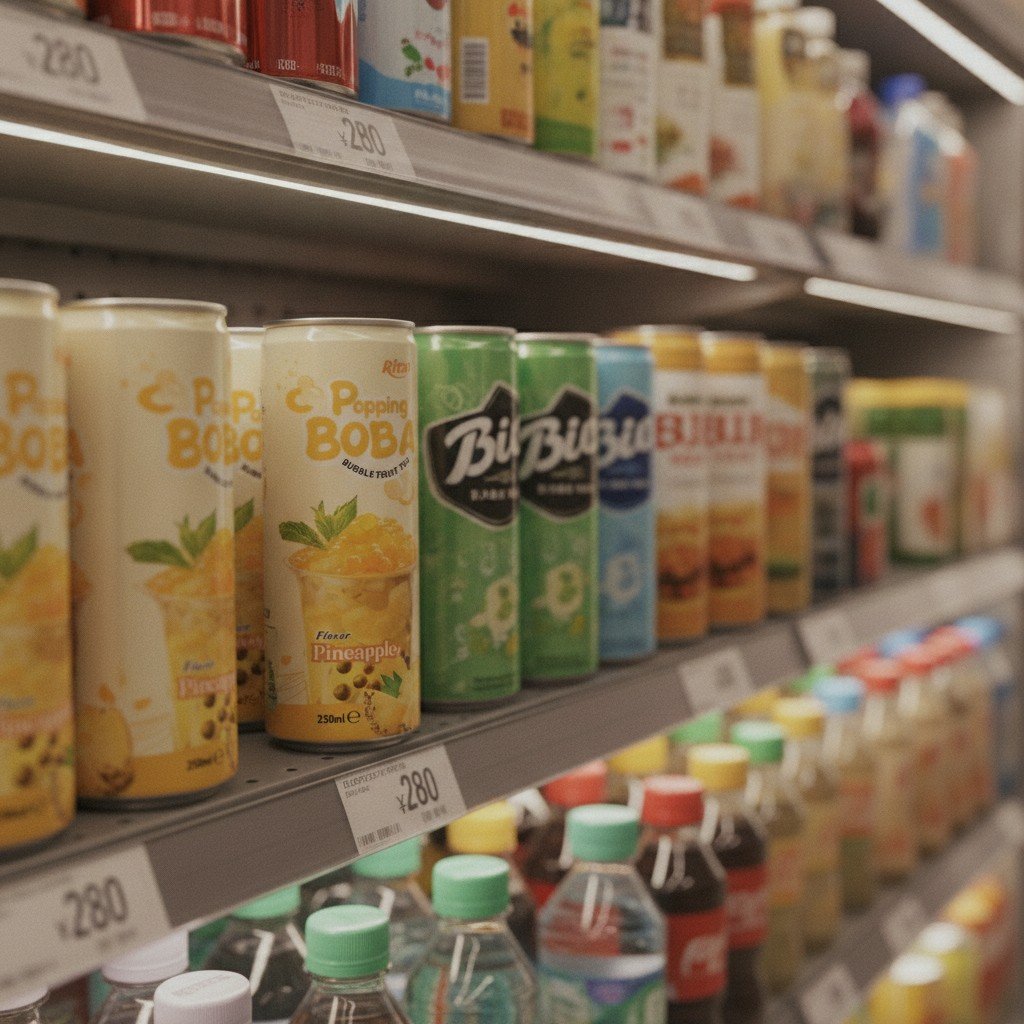
To maximize the potential of the Popping Boba Bubble Fruit Pineapple Tea 250ml Cans, distributors should adopt a multi-channel approach. In the USA, focus on Asian grocery chains and online platforms first, then expand to mainstream retailers. In Southeast Asia, prioritize convenience stores and e-commerce, where impulse buying is high. Offering sample programs to potential buyers can help build confidence in the product's quality and taste.
Pricing and Positioning
Given the product's premium positioning (real fruit juice, popping boba, aluminum can), a price point of $2.00–$3.00 per can in the US market is realistic. In Southeast Asia, a price of $1.00–$1.50 per can would be competitive against fresh bubble tea. Distributors should emphasize the value proposition: no preparation, no mess, and consistent quality. Bundling with other RTD teas or tropical fruit juices can increase average order value.
Marketing and Consumer Education
While the product is intuitive to use, some consumers may be unfamiliar with canned bubble tea. Distributors should invest in in-store tastings, social media campaigns, and influencer partnerships to demonstrate the popping boba experience. Highlighting the convenience factor—no straw needed for the boba (the cans can be designed with a wide opening or a special lid)—can be a key selling point. Collaborating with bubble tea influencers on TikTok or Instagram can generate buzz, especially among younger demographics.
Frequently Asked Questions
What is the shelf life of the Popping Boba Bubble Fruit Pineapple Tea 250ml Cans?
The product has a shelf life of 18 months when stored in a cool, dry place. The aluminum can packaging protects the beverage from light and oxygen, ensuring consistent quality over time.
What are the minimum order quantities for this product?
The minimum order quantity is 200 cartons per order. Each carton contains 24 cans (250ml each), making it accessible for both small and large distributors.
Can I customize the flavor or packaging for my brand?
Yes, the manufacturer offers OEM and ODM services. You can customize the flavor profile, sweetness level, popping boba type, and can design. Contact the supplier for details on minimum customization quantities.
Which markets are best suited for this product?
The USA and Southeast Asia are the primary target markets. The USA has growing demand for Asian-inspired RTD beverages, while Southeast Asia has a strong bubble tea culture with an emerging canned segment. Both markets offer strong distribution opportunities.
What certifications does the product have?
The product is certified with ISO, HACCP, HALAL, USDA Organic, and EU Organic. Additional certifications like BRC and FSSC 22000 are available upon request, depending on the buyer's requirements.