Premium Fruit and Vegetable Juice Blends in Sleek Cans — A Growing Opportunity for Global Beverage Importers
The global beverage market is undergoing a significant transformation, with consumers increasingly seeking convenient, flavorful, and ingredient-forward options. Among the most dynamic segments is the fruit and vegetable juice blend category, particularly those packaged in sleek aluminum cans.
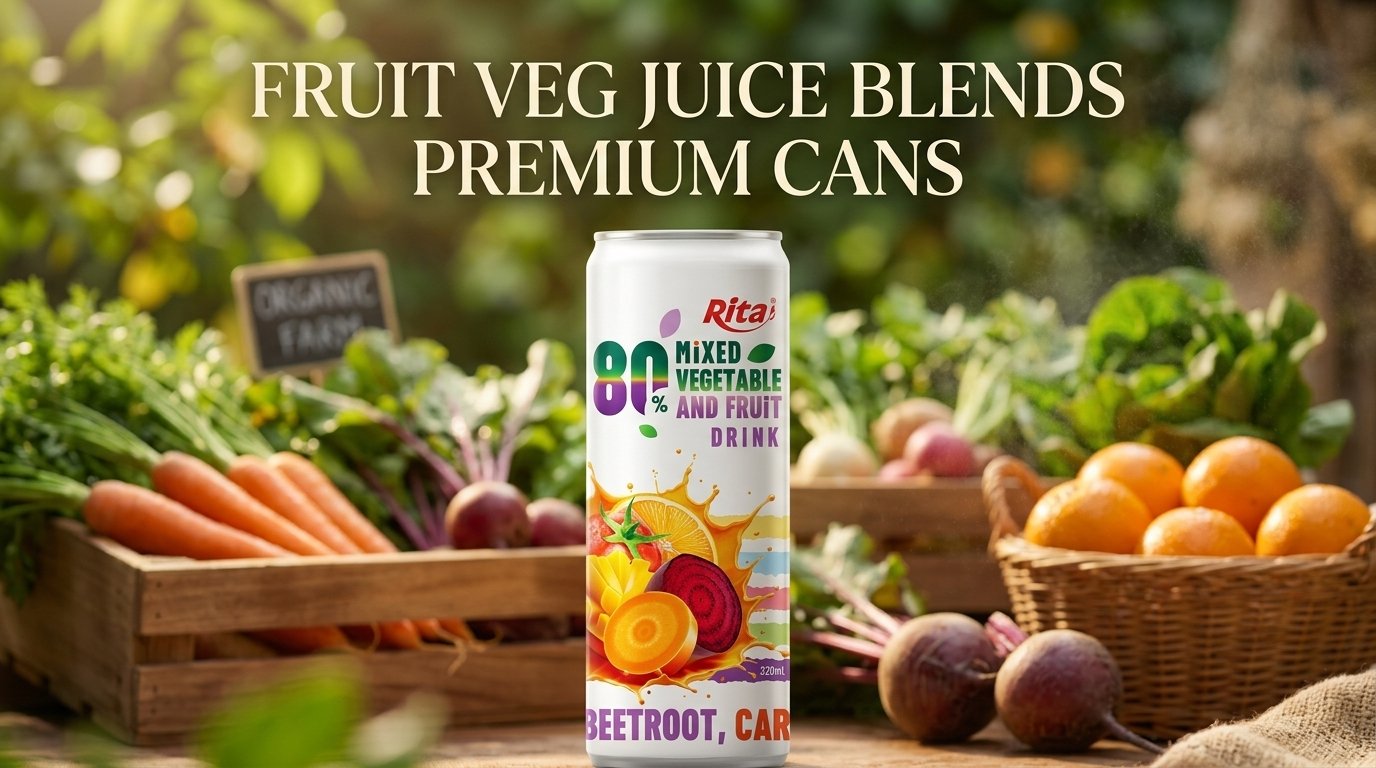
For importers, distributors, and wholesalers, understanding this shift is critical to capturing new revenue streams. This article explores the market dynamics, production capabilities, and strategic opportunities surrounding high-concentration fruit and vegetable drinks in sleek can formats, using the Sleek Can 320ml 80% Best Fruit And Vegetable Drinks as a reference point for industry standards.
Key Takeaways
- The demand for premium fruit and vegetable juice blends in sleek cans is surging across USA and Europe, driven by convenience and clean-label trends.
- High juice content products (80% or more) command higher shelf prices and consumer trust in competitive retail environments.
- Aluminum cans offer superior product protection, sustainability appeal, and branding opportunities for private label and OEM partnerships.
- Vietnam-based manufacturers like RITA provide scalable production capacity with global certifications, making them ideal partners for importers.
- Understanding logistics, MOQ, and packaging specifications is essential for successful market entry with products like the Sleek Can 320ml 80% Best Fruit And Vegetable Drinks.
Market Trends Driving the Demand for High-Juice Content Beverages
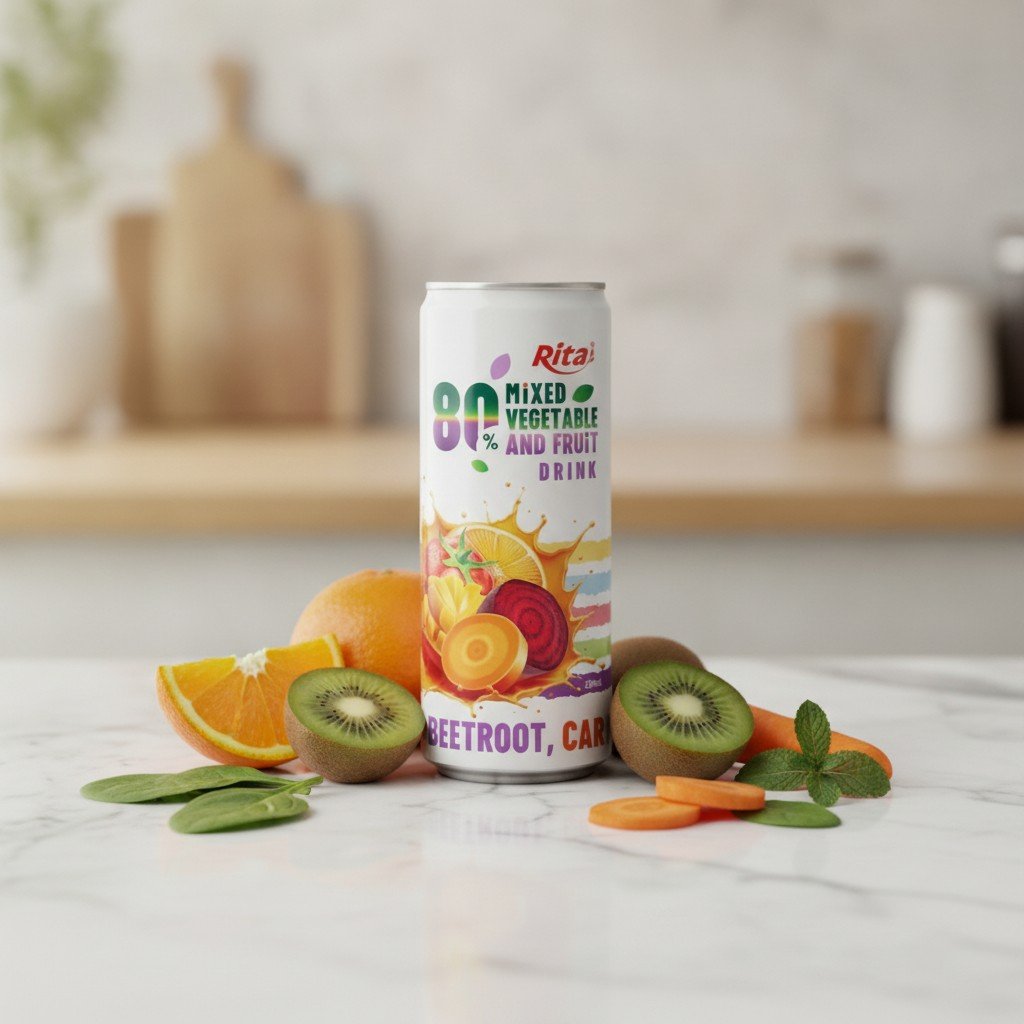
Consumer behavior in developed markets such as the United States and Western Europe has shifted decisively toward beverages perceived as natural and minimally processed. This trend directly benefits products with high fruit and vegetable juice content. Drinks containing 80% juice or more are increasingly positioned as a premium alternative to sugary sodas and artificially flavored drinks. According to industry reports, the global fruit and vegetable juice market is projected to grow at a compound annual growth rate (CAGR) of over 5% through 2030, with the high-juice segment outperforming lower-concentration alternatives.
Importers in the USA and Europe are particularly interested in products that offer a clean ingredient list. A 320ml sleek can format meets the demand for single-serve, on-the-go consumption without compromising on quality. The aluminum can itself is a key selling point: it is lightweight, fully recyclable, and protects the beverage from light and oxygen, preserving flavor and freshness for up to 18 months. This shelf life is a critical factor for distributors managing complex supply chains across continents.
Why the USA Market is a Prime Target for Fruit and Vegetable Drinks
The United States remains the largest importer of fruit and vegetable juices globally. American consumers have shown a strong preference for functional convenience, but under FDA regulations, health claims are strictly limited. Therefore, the focus for importers should be on taste, ingredient transparency, and packaging innovation. Products like the 320ml sleek can with 80% juice content fit perfectly into the growing "better-for-you" category without making overt health assertions. The port of entry, such as Cat Lai port in Vietnam, connects efficiently to major US distribution hubs via established shipping routes.
Distributors in the USA are increasingly seeking private label solutions to differentiate their offerings. A Vietnamese manufacturer with strong OEM capabilities can provide custom formulations, adjusting sweetness levels or fruit combinations to suit local palates. The minimum order quantity (MOQ) of 200 cartons per order is accessible for mid-sized importers looking to test new SKUs without excessive risk. With a supply ability of 300 twenty-foot containers per month, manufacturers can scale quickly once demand is confirmed.
European Market Preferences for Sustainable and Premium Packaging
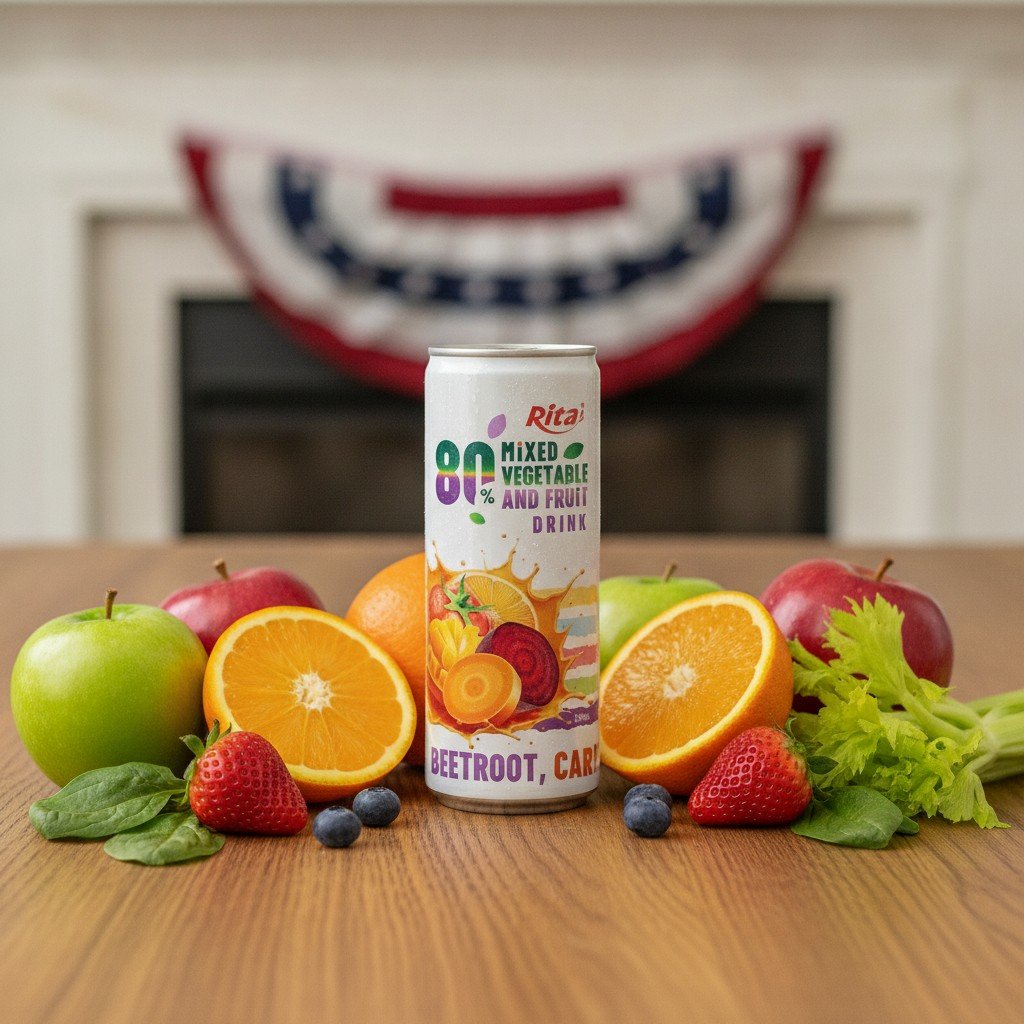
Europe has long been a leader in sustainability regulations and consumer awareness. The aluminum sleek can is particularly well-received in markets like Germany, France, and the UK, where recycling rates for metal packaging exceed 70%. For European importers, the environmental credentials of the packaging are as important as the product inside. A 320ml can made from recyclable aluminum aligns with EU directives on single-use plastics and circular economy goals.
Furthermore, European consumers appreciate high juice content as a marker of quality. Products labeled as 80% fruit and vegetable juice are often perceived as more authentic than those with added sugars or concentrates. The 18-month shelf life provides ample time for warehousing and distribution across multiple countries. Manufacturers holding certifications such as ISO, HACCP, HALAL, USDA Organic, and EU Organic meet the stringent requirements of European retailers and food safety authorities.
Production Capabilities and Quality Assurance for Global Export
Behind every successful beverage import is a reliable manufacturing partner. Vietnam has emerged as a major hub for beverage production, offering competitive pricing without compromising on quality. Companies like RITA Food & Drink Co., Ltd operate state-of-the-art facilities with over 50 production lines and a total factory area of approximately 30,000 square meters. This scale allows for consistent output of high-volume orders, with a combined production base of 10,000 tons per month for both canned and PET bottle lines.
Quality control is paramount. A dedicated QC laboratory staffed by 40 professionals ensures that each batch meets international standards. Certifications including BRC, FSSC 22000, and SMETA/BSCI provide importers with the confidence that their supply chain is ethical and compliant. For private label projects, the ability to develop custom formulations and packaging designs is a significant advantage. Importers can work directly with the R&D team to create a product that stands out in their target market.
OEM and ODM Services: Tailoring Products for Specific Markets
One of the most valuable services for beverage importers is OEM (Original Equipment Manufacturing) and ODM (Original Design Manufacturing). A partner like RITA offers end-to-end solutions, from concept development to final production. This includes custom formulation of juice blends, sweetness levels, and viscosity to match regional taste preferences. For example, a distributor targeting the Middle East might prefer a slightly sweeter profile, while a European importer may request a more tart or natural flavor.
Packaging is equally customizable. While the 320ml sleek can is a popular choice, manufacturers can also produce 200ml, 250ml, 330ml, and 500ml cans, as well as PET bottles in various sizes. This flexibility allows importers to create a diversified product line under one supplier relationship. The MOQ of 200 cartons per order is reasonable for initial market testing, and lead times of 20-25 days after order confirmation support efficient inventory planning.
Logistics and Supply Chain Considerations for Bulk Import
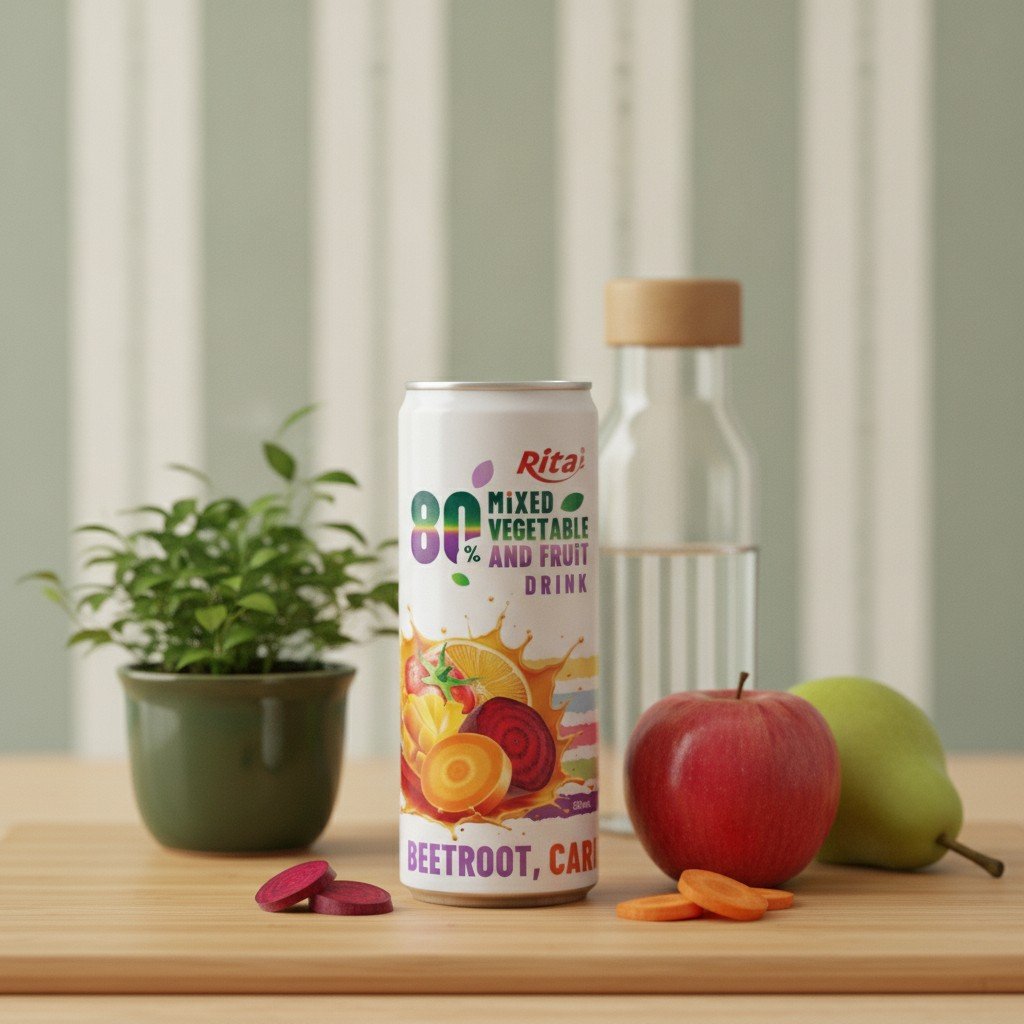
Successful importation of beverage products requires careful attention to logistics. Products are typically shipped from Cat Lai port in Ho Chi Minh City, one of Vietnam's busiest container ports. For USA-bound shipments, transit times to the West Coast are approximately 15-20 days, while European destinations range from 20-30 days depending on the port of discharge. The 18-month shelf life provides a comfortable window for customs clearance, warehousing, and distribution.
Payment terms are typically L/C (Letter of Credit) or T/T (Telegraphic Transfer), which are standard in international trade. Importers should work closely with their freight forwarders to ensure proper documentation, including certificates of origin, phytosanitary certificates, and any required organic certifications. The supply ability of 300 twenty-foot containers per month ensures that even large orders can be fulfilled without delays.
Cost Efficiency and Competitive Pricing in the Global Market
Vietnam's competitive labor and raw material costs translate into attractive pricing for importers. The country benefits from favorable trade agreements with both the USA and the EU, reducing tariff barriers for processed food products. When compared to domestic production in high-cost countries, importing from Vietnam can result in savings of 20-30% on landed costs, depending on the product. This margin allows distributors to invest in marketing and brand building while maintaining healthy profit margins.
For wholesalers and large retailers, the ability to source a premium product at a competitive price is a significant advantage. The 80% juice content positions the product above standard juice drinks, justifying a higher retail price point. Combined with the sleek can's modern aesthetic, the product appeals to millennials and Gen Z consumers who prioritize both quality and sustainability.
Strategic Recommendations for Importers and Distributors
To capitalize on the growing demand for fruit and vegetable juice blends, importers should consider the following strategies. First, focus on markets where clean-label and sustainable packaging trends are strongest, such as the USA and Europe. Second, partner with manufacturers that offer comprehensive OEM/ODM services to differentiate your brand. Third, leverage the sleek can format as a key selling point in your marketing materials, emphasizing its convenience and recyclability.
It is also advisable to start with a modest order to test the market response. The MOQ of 200 cartons allows for a manageable initial investment. Once the product gains traction, scaling up is straightforward given the manufacturer's high supply capacity. Building a long-term relationship with a reliable supplier like RITA ensures consistent quality and priority access to new product innovations.
Frequently Asked Questions
What is the typical MOQ for importing sleek can fruit and vegetable drinks from Vietnam?
The minimum order quantity is typically 200 cartons per order, which is accessible for mid-sized importers looking to test new products.
How long is the shelf life of a 320ml sleek can fruit and vegetable drink?
The shelf life is 18 months, providing ample time for international shipping, warehousing, and retail distribution.
What certifications should I look for when sourcing from a Vietnamese beverage manufacturer?
Key certifications include ISO, HACCP, HALAL, BRC, FSSC 22000, USDA Organic, and EU Organic, depending on your target market.
Can I customize the flavor and packaging for my private label brand?
Yes, most manufacturers offer OEM/ODM services, allowing you to customize juice formulations, sweetness levels, and can designs to suit your brand.
What are the typical payment terms for bulk beverage imports?
Standard payment terms are L/C (Letter of Credit) or T/T (Telegraphic Transfer), which are common in international trade.